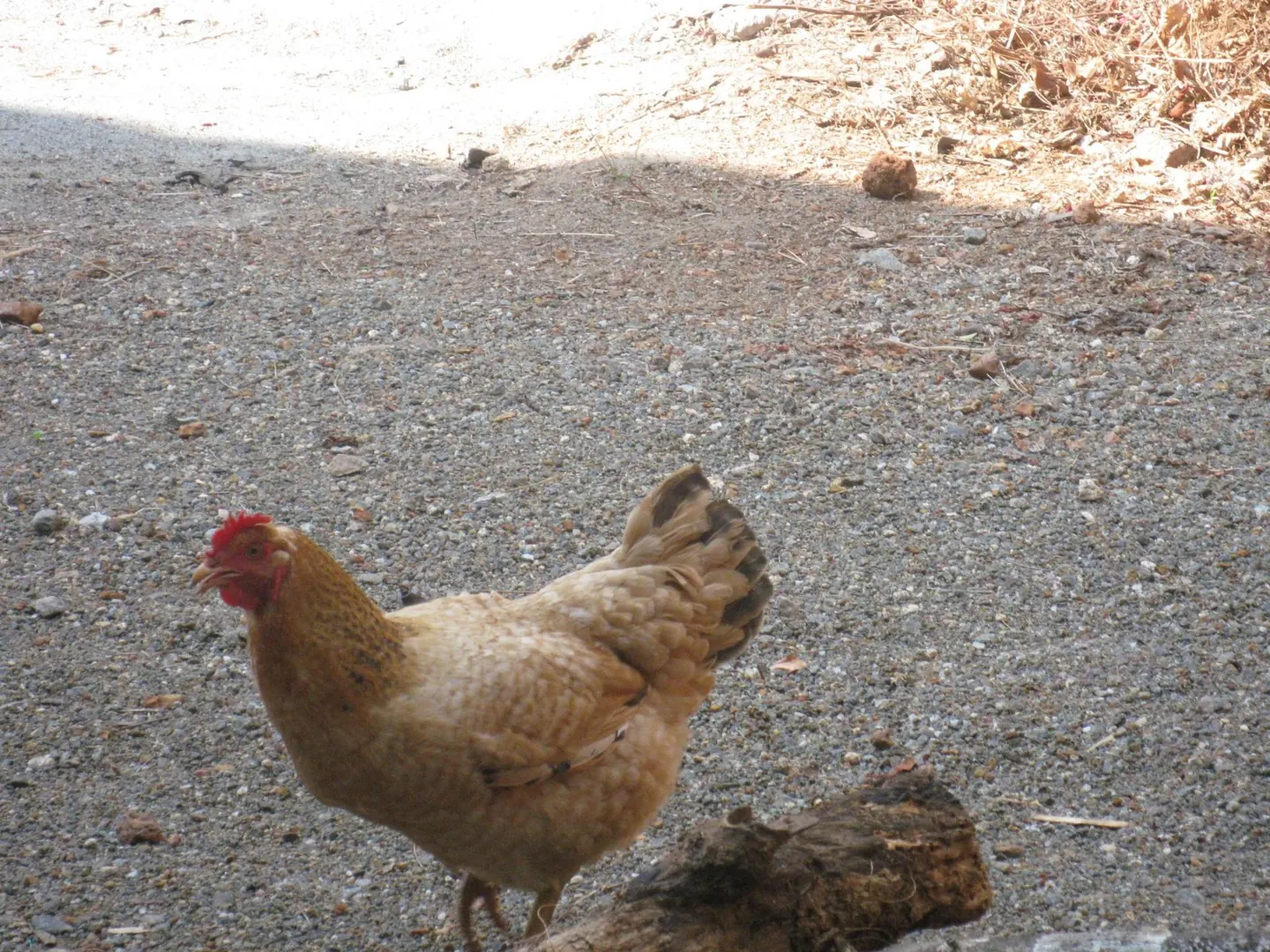
Giriraja is an improved chicken variety, not a breed: a coloured backyard bird kept for meat and eggs. The Department of Poultry Science at the Veterinary College, Bengaluru, now part of KVAFSU, released it in 1989 (KVAFSU). A 2017 study by KVAFSU researchers calls it the first improved coloured bird made for backyard rearing (KVAFSU study).
How to recognise it
- Colour: coloured feathers, like the local village breed (UAS Bangalore). Many country chickens look the same, so colour alone does not prove a bird is Giriraja.
- Size: a heavy bird for a backyard chicken. The Kannada page of UAS Bangalore's farm portal gives adult cocks about 4–5 kg and hens about 3.5–3.75 kg (its English page gives 3.5–4.5 kg for adult birds), and 1.6–1.9 kg at 8 weeks (UAS Bangalore).
- Eggs: about 55–60 g (UAS Bangalore).
What it is good for
- Meat and eggs. KVAFSU describes Giriraja as a dual-purpose, coloured variety (KVAFSU).
- Eggs. UAS Bangalore's portal gives about 140–150 eggs a year, with the first egg at about 170 days. In the same table, local village birds lay 60–70 eggs of 35–40 g and weigh 2–2.5 kg as adults (UAS Bangalore).
- Low-cost village keeping. Giriraja forages like a village hen, eating local feed and insect larvae in manure. It is easy to manage in a village, suits low-input feeding and needs no special housing (UAS Bangalore).
- Figures vary. Other published studies give quite different weights and egg numbers, and KVAFSU's own department page gives none, so treat these numbers as a guide, not a promise.
Where it is mainly found
Giriraja has no home district: it was bred at the Veterinary College in Hebbal, Bengaluru (KVAFSU study). KVAFSU says Giriraja and its later variety Swarnadhara (2005) have become popular with farmers across the country (KVAFSU), and a 2017 study by KVAFSU researchers notes that poultry farmers all over Karnataka have taken up Giriraja for rural poultry farming (KVAFSU study). The department supplies day-old Giriraja chicks to farmers, self-help groups and Karnataka's Department of Animal Husbandry and Veterinary Services, and parent birds to state government farms (KVAFSU).

Looking for Giriraja chickens?
Giriraja is an improved bird bred by a research institute, and farmers in many states raise it. Search “Giriraja” in the Kattutharai app to find birds near you, or see all chickens for sale. The seller names the breed and Kattutharai does not check it, so look at the birds yourself before you pay.


Rearing tips
- Let them forage. Giriraja was bred to keep the scavenging habit of village birds while giving more meat and eggs (UAS Bangalore). A yard where the birds can find local feed and insects suits it.
- Simple housing. It needs no special housing (UAS Bangalore), but keep the birds in a shelter at night and away from wild birds and your neighbours' birds (bird flu action plan).
- Ranikhet vaccination. Giriraja is hardy, but it still needs vaccination against Ranikhet disease (UAS Bangalore). Ask your vet for the schedule and what else your area needs.
- Sudden deaths. Report unusual sickness or deaths to the nearest veterinary hospital within 24 hours (bird flu action plan). For more on keeping chickens healthy, see Country chicken in South India: breeds, buying and care.
Buying tips
- Buy from a known source. KVAFSU's Department of Poultry Science in Bengaluru supplies Giriraja chicks to farmers and to Karnataka's animal husbandry department, and parent birds to state government farms (KVAFSU). Ask there, or at your nearest veterinary hospital.
- No fixed look. Giriraja looks like a coloured village hen, and crosses are common. The breed name in an ad is the seller's word, and Kattutharai does not check it. Ask where the chicks were hatched.
- Healthy birds only. Do not buy birds that are weak, sit still with drooping wings, or have a swollen head, a runny nose, or a comb and wattles that have changed colour (bird flu action plan). Ask which vaccines the birds have had.
Frequently asked questions
Is Giriraja a breed?
No. It is an improved variety released by the Veterinary College, Bengaluru, now part of KVAFSU, in 1989 (KVAFSU). It is not one of the registered chicken breeds on NBAGR's list (ICAR-NBAGR).
How many eggs does a Giriraja hen lay?
About 140–150 eggs a year, each about 55–60 g, starting at about 170 days of age, according to UAS Bangalore's portal (UAS Bangalore). Other studies give different figures.
How heavy does a Giriraja grow?
Adult cocks weigh about 4–5 kg and hens about 3.5–3.75 kg, and young birds about 1.6–1.9 kg at 8 weeks (UAS Bangalore). Other studies give different figures.
Where can I get Giriraja chicks?
From KVAFSU's Department of Poultry Science at the Veterinary College, Bengaluru, which supplies day-old chicks to farmers and self-help groups (KVAFSU). Your nearest veterinary hospital in Karnataka can also tell you where chicks are available.
Next
Compare it with ICAR-DPR's improved varieties Vanaraja, Srinidhi and Gramapriya. Read Country chicken in South India: breeds, buying and care for buying and care, and browse country chickens for sale.