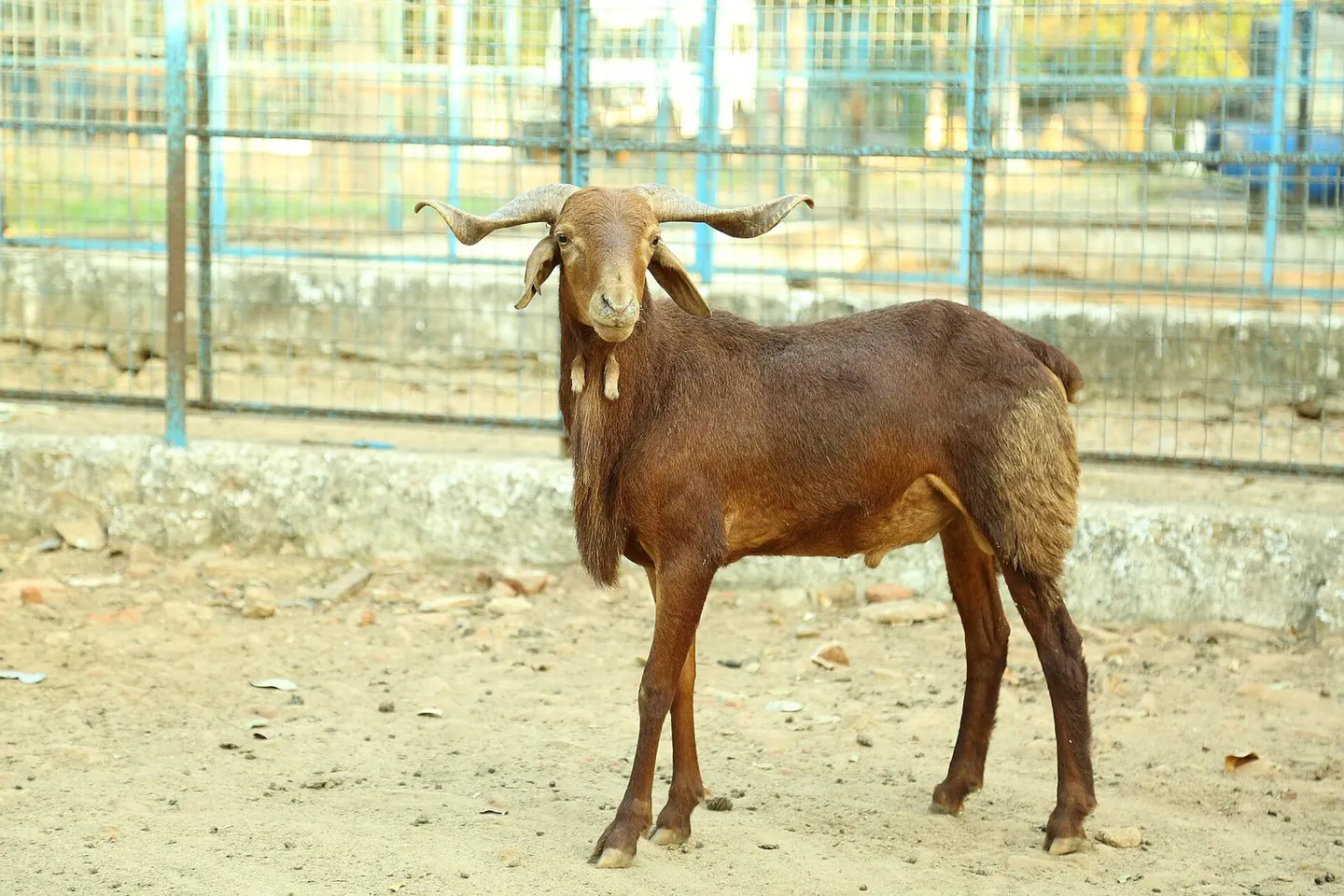
Madras Red is a brown hair sheep of northern Tamil Nadu, kept mainly for meat. It lives on grazing in the districts around Chennai, and it is one of Tamil Nadu's registered sheep breeds (ICAR-NBAGR). Its other name is Chennai Sigappu: "Madras" is the old name of Chennai, and "red" is its coat colour (ICAR-NBAGR).
How to recognise it
- Coat: red-brown, from light tan to dark brown, made of short, coarse hair rather than wool. Some sheep have white marks on the forehead, the inner thighs and the lower belly (ICAR-NBAGR).
- Horns: rams have strong, ridged horns with a twist; most ewes have none, and a few have small stubs (TANUVAS). NBAGR records rams' horns at 15–25 cm (ICAR-NBAGR).
- Head: a prominent Roman (arched) nose and drooping ears about 12–13 cm long (ICAR-NBAGR); the tail is short and thin (TANUVAS).
- Weight: ewes weigh about 23 kg. Rams average about 26 kg in village flocks (ICAR-NBAGR), and fully grown rams reach about 35 kg (TANUVAS, TNAU).
- Lambs: in village flocks fed only on grazing, lambs weighed about 2.7 kg at birth, 15 kg at 6 months and 21 kg at 1 year (TANUVAS study).
What it is good for
- Meat is the main use (ICAR-NBAGR). Lambs grow fastest in their first 3 months and more slowly after that, so a TANUVAS study suggests selling them at 6–9 months (TANUVAS study).
- Skin and manure add to the income: farmers raise Madras Red for meat, skin and manure (TANUVAS study). In Villupuram and Tiruvannamalai, flocks are often penned overnight in farmers' fields to manure them (TANUVAS survey).
- One lamb at a time. NBAGR records 1 lamb per lambing, the first at about 18 months and the next about 8 months later (ICAR-NBAGR); in the TANUVAS village survey, though, about half the flocks had their first lambs only at 2–2.5 years (TANUVAS survey). In a TANUVAS study, only about 1% of births were twins (TANUVAS).
- Hardy. TANUVAS scientists describe it as a hardy sheep that does well even on poor pasture (TANUVAS).
Where it is mainly found
NBAGR's breed record places the home tract in the districts around Chennai: Chennai, Tiruvallur, Kancheepuram, Villupuram, Tiruvannamalai and Cuddalore (ICAR-NBAGR). Since 2019, parts of the old Kancheepuram and Villupuram districts have become Chengalpattu and Kallakurichi districts. TANUVAS has kept a Madras Red flock at its research station in Kattupakkam since 1957 (TANUVAS).
The sheep are raised mostly by landless farmers (TANUVAS study). In a TANUVAS survey, about half the flocks had 26–50 sheep. As towns spread, grazing land shrinks: farmers in that survey named the lack of summer grazing as their biggest problem, ahead of attacks on their flocks and low sale prices (TANUVAS survey).
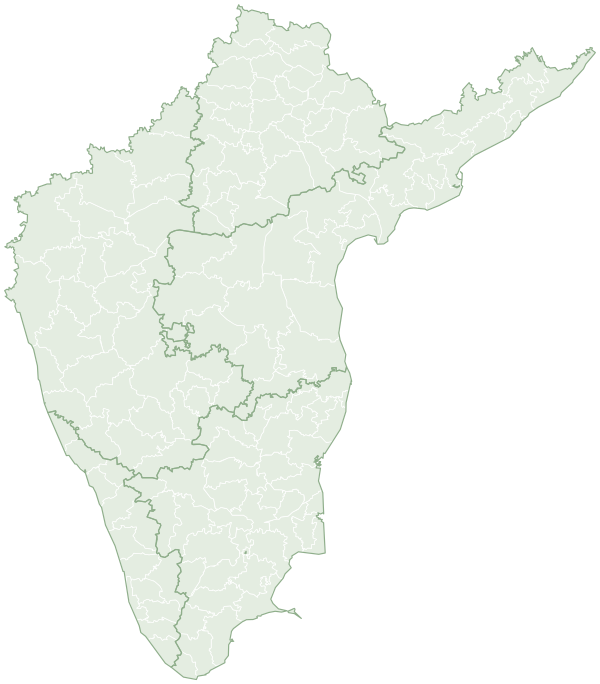

Looking for Madras Red sheep?
See ads in the districts where Madras Red sheep come from (on Kattutharai, sheep are in the goat section), or search “Madras Red” in the app to find them near you. The seller names the breed and Kattutharai does not check it, so look at the animal yourself before you pay.
Goat and sheep ads in its home districts, 1 Nov 2026:
- Chennai · 7
- Tiruvallur · 4
- Kancheepuram · 13
- Chengalpattu · 12
- Viluppuram · 18
- Kallakurichi · 27
- Tiruvannamalai · 16
- Cuddalore · 15


Rearing tips
- Grazing first. Madras Red is kept on grazing (ICAR-NBAGR). In the TANUVAS survey, most flocks grazed 7–8.5 hours a day and walked 3–5 km, on common land, riverbanks and harvested fields (TANUVAS survey). See Goat feeding: fodder, concentrate mix and water.
- Plan for summer. Grazing runs short in the dry months, and some farmers then feed groundnut haulms (TANUVAS survey). Store dry fodder, or grow your own fodder.
- A safe night pen. Village flocks spend the night in an open pen near the house (TANUVAS study). Fence it well; see Goat shed and housing: space, floor and roof.
- Mating. The main mating season is July to September (breed survey). Farmers in the TANUVAS survey exchanged rams between flocks (TANUVAS survey) — a good way to avoid inbreeding.
- Health. Sheep need the same daily checks, vaccinations and deworming as goats. Follow Goat health: vaccination schedule and deworming, and ask your vet which vaccines sheep need in your area.
Buying tips
- Check the breed signs: an even red-brown coat of short hair, a Roman nose, drooping ears, and twisted horns on the rams. A woolly fleece, a mostly white or black body, or very long ears do not fit the breed's description (ICAR-NBAGR) and point to a cross.
- Crosses are common. TANUVAS researchers report that the region's sheep have been crossed freely with non-descript sheep, diluting the breeds (TANUVAS). Ask to see the mother and the rest of the flock: a flock of even, brown sheep is a good sign.
- The breed name in an ad is the seller's word. Kattutharai does not check it, so see the sheep yourself before you pay.
- Age: count the large front teeth as you would for goats (the teeth table), and treat the ages as a rough guide for sheep. For health checks and safe payment, follow How to buy goats safely: health, age and fraud checks.
Frequently asked questions
Is Madras Red good for a beginner?
Yes, if you have grazing land nearby. It is hardy and lives on grazing, but a ewe usually has one lamb at a time, so the flock grows slowly. Start small; see Goat farming for beginners: is it right for you?.
How heavy does a Madras Red sheep get?
Ewes weigh about 23 kg. Rams average about 26 kg in village flocks and reach about 35 kg when fully grown.
Is Madras Red the same as Chennai Sigappu?
Yes. NBAGR lists Chennai Sigappu as another name of the breed (ICAR-NBAGR).
Do Madras Red sheep give wool?
No. They have short hair, not wool, and are kept for meat.
Next
Compare other Tamil Nadu sheep, Mecheri and Ramnad White, or Nellore sheep from Andhra Pradesh. Get the shed ready with Goat shed and housing: space, floor and roof, and see all breed guides. To see what farmers near you are selling, browse goats and sheep for sale.