Mecheri is a medium-sized, light-brown meat sheep from Salem district in Tamil Nadu, named after the Mecheri block near Mettur. Neither rams nor ewes have horns, its coat is short hair rather than wool, and its skin makes high-quality leather. On Kattutharai, sheep are listed in the goat (aadu) section.
How to recognise it
- Colour: light brown (light tan), often darker on the neck; many sheep also have white patches (NBAGR database).
- No horns: both rams and ewes are polled (NBAGR database, TANUVAS).
- Coat: very short hair, which is not shorn (TANUVAS).
- Build: medium-sized and leggy, with a compact body, a broad chest, a slightly arched (Roman) nose, medium-sized ears and straight legs; the hooves are brown or black.
- Weight: adult rams weigh about 32 kg and ewes about 28 kg (NBAGR database, TANUVAS).
What it is good for
- Meat. Mecheri is a meat breed that gives a high share of meat for its weight — a dressing percentage of about 54% (NBAGR database).
- Skin. Leather from Mecheri skins tested stronger, softer and more even than leather from mixed sheep, good enough for high-value garment leather (TANUVAS).
- Lambs. A ewe usually has one lamb at a time (NBAGR database). Ewes are first mated at about 12 months and first lamb at about 17 months, then lamb about every 7–8 months; they breed in every season and stay productive for 6–7 years (TANUVAS).
- Growth. Lambs weigh about 2 kg at birth, 11–12 kg at 6 months and 15–18 kg at 1 year; early maturity is one of the breed's known traits (TANUVAS).
Where it is mainly found
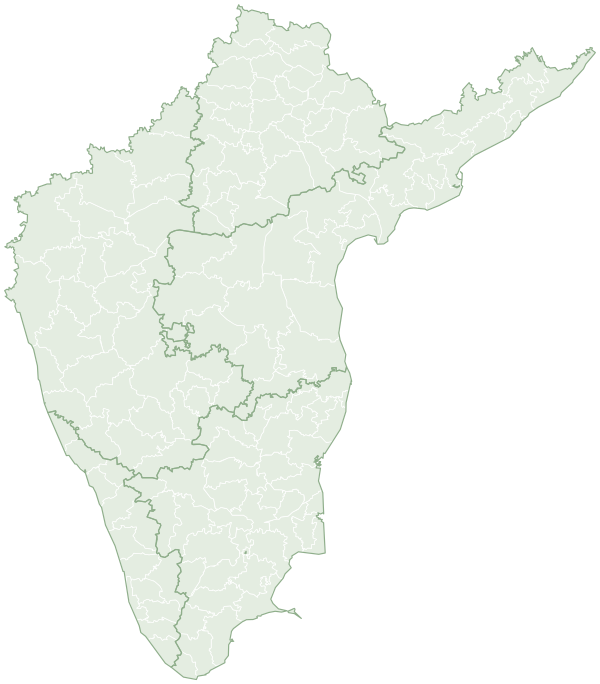
NBAGR registers Mecheri as a Tamil Nadu breed (breed register). Its home tract covers Salem, Namakkal, Erode, Karur and Dharmapuri districts, and the most typical animals are found in the Tharamangalam, Omalur, Kolathur and Mecheri blocks of Salem district and in Perundurai taluk of Erode (NBAGR database); TANUVAS adds parts of Dindigul. The name comes from Mecheri block in Mettur taluk — said to come from mechal eri, a pond where sheep graze — and the breed is also called Kannivadi and Mailambadi (TANUVAS). About 12.1 lakh sheep were recorded as Mecheri in the government's 2013 breed survey (NBAGR database).

Looking for Mecheri sheep?
See ads in the districts where Mecheri sheep come from (on Kattutharai, sheep are in the goat section), or search “Mecheri” in the app to find them near you. The seller names the breed and Kattutharai does not check it, so look at the animal yourself before you pay.
Goat and sheep ads in its home districts, 1 Nov 2026:


Rearing tips
- Grazing flocks. Mecheri flocks stay in one area and graze for about 7–8 hours a day on uncultivated land; cultivated fodder or concentrate is given only when grazing is scarce, and the sheep are penned at night (NBAGR database). Flocks average about 24 sheep (TANUVAS–NBAGR study).
- Plan shelter and dry-season feed. Start with Goat shed and housing: space, floor and roof and grow your own fodder, and ask your veterinary hospital what to change for sheep.
- Deworm and vaccinate on time. Farmers in the home tract deworm at regular intervals (NBAGR database). Ask your vet for the vaccination calendar for sheep in your area; Goat health: vaccination schedule and deworming explains the general approach.
- Make every lamb count. With one lamb per lambing, give colostrum early and keep lambs dry and warm: see Goat kid care: colostrum, creep feed and weaning.
- Good rams. TANUVAS's Mecheri Sheep Research Station at Pottaneri keeps a Mecheri flock to supply better animals to farmers (TANUVAS station). Change rams every 2–3 years: see avoid inbreeding.
Buying tips
- Look for the breed signs: light brown, short hair, no horns on rams or ewes, and a slightly arched nose. A horned ram, a woolly coat or a mostly white body points to a cross.
- Check a breeding ram's testicles. TANUVAS recorded undescended testicles in about 9% of Mecheri males, so buy a breeding ram only if both testicles are down and even in size (TANUVAS).
- Crosses are common, so a sheep sold as Mecheri may be a cross. The breed name in an ad is the seller's word, and Kattutharai does not check it. See the flock, ask where the parents came from, and check the signs above yourself.
- Check health and age before you pay: see How to buy goats safely: health, age and fraud checks.
Frequently asked questions
Is Mecheri a good sheep for a beginner?
It can be, if you live in or near its home districts, have grazing land, and buyers near you ask for it. Sheep need daily herding and care like goats do: see Goat farming for beginners: is it right for you?.
How much does an adult Mecheri sheep weigh?
About 32 kg for a ram and 28 kg for a ewe on average, and about 15–18 kg at 1 year (NBAGR database, TANUVAS). Your own sheep will vary with feed and care.
Do Mecheri sheep have horns?
No. Both rams and ewes are naturally hornless, which is one of the easiest ways to tell the breed (TANUVAS).
Why is Mecheri skin valued?
In tests reported by TANUVAS, Mecheri leather was stronger than leather from mixed sheep, with a softer feel, tighter grain and more even colour, so it suits high-value garment leather (TANUVAS).
Next
Compare Mecheri with two other Tamil Nadu sheep breeds, Madras Red and Ramnad White, or see all goat and sheep breeds. To find Mecheri sheep near you, browse goats and sheep for sale.