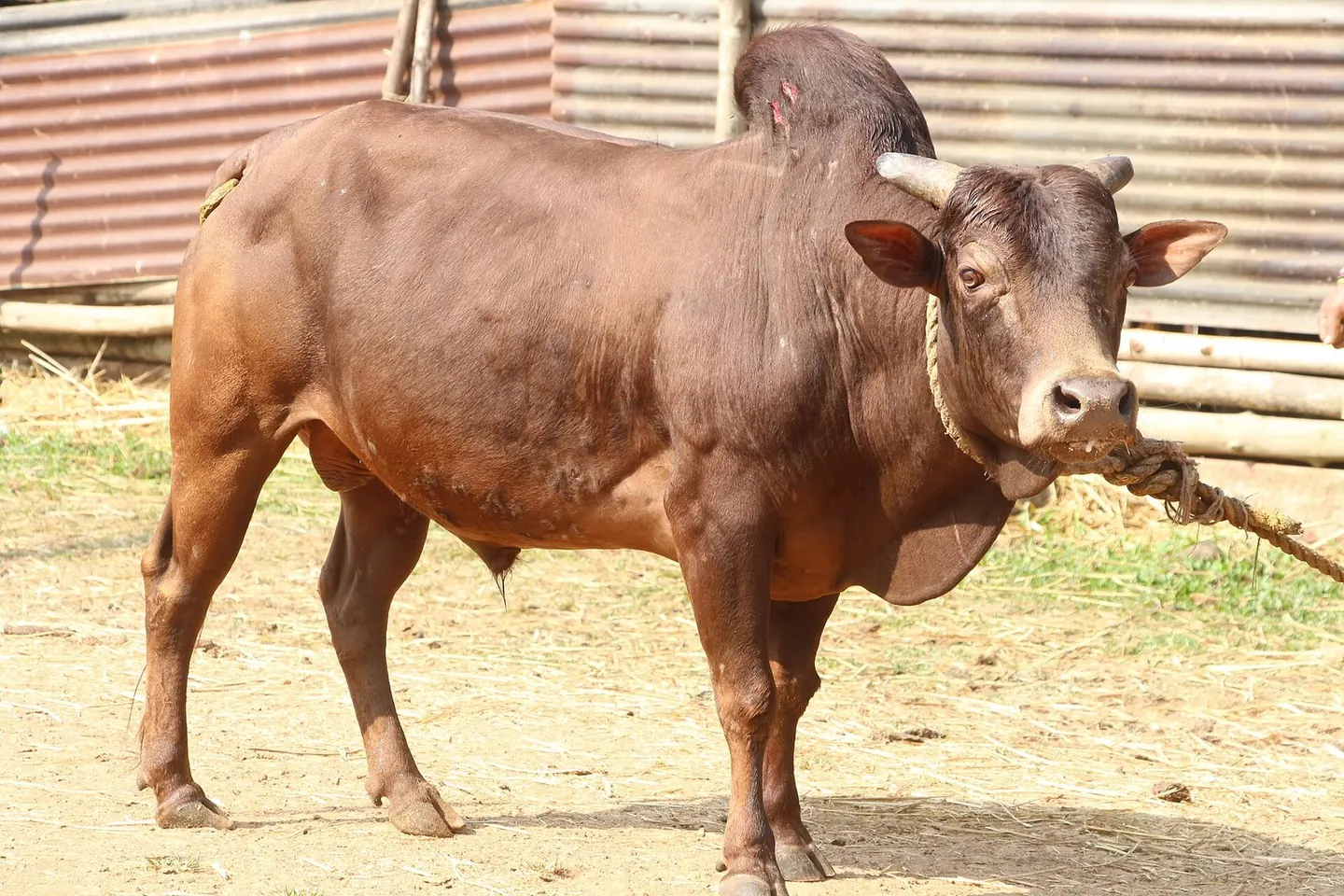
Malnad Gidda is a small, mostly black cattle breed of Karnataka's rainy Western Ghats hills, the Malnad. Gidda means short, and adults weigh only about 80–120 kg (NBAGR database). Farmers keep it for milk, light farm work and manure on very little feed (NBAGR database). NBAGR has registered it as a breed of Karnataka (ICAR-NBAGR).
How to recognise it
- Colour: mostly black, with light fawn shading on the thighs and shoulders (NBAGR database). Brown, red, fawn, white or mixed animals are also found (NBAGR study).
- Size: very small and compact. Bulls and cows both stand only about 90 cm at the shoulder (NBAGR database), and a 2008 NBAGR study described it as one of the smallest of India's known cattle breeds (2008 study).
- Horns: small, pointing outwards, upwards and inwards (NBAGR database), with pointed tips (NBAGR study).
- Body: a small hump in cows and a prominent one in bulls, a small to medium dewlap, ears held level, and a face that is straight in cows and slightly dished in bulls (NBAGR study). The tail switch is black, and cows have a small, bowl-shaped udder (NBAGR database).
- Quick on its feet: these cattle run fast and jump well, which helps them get away from wild animals in the hills (NBAGR study).
What it is good for
- Milk, a little. NBAGR records about 218 kg in a lactation, though the best cows give 3–5 kg a day (NBAGR database). In a 2017–18 ICAR survey in Shivamogga district, cows gave about 2.3 litres a day, the least of Karnataka's six native breeds, and milked for about 7 months (ICAR survey).
- Manure and light work. NBAGR lists draught, milk and manure as the breed's uses, all from very little feed (NBAGR database). In the ICAR survey, though, the cattle did little farm work (ICAR survey).
- Calves. One at a time. One local name, Varshagandhi, means a cow that calves every year (NBAGR database). Recorded figures are a first calf at about 45 months and then one about every 17 months (2008 study).
Where it is mainly found
NBAGR's breed record names seven districts of the hills and coast: Shivamogga, Chikkamagaluru, Hassan, Kodagu, Uttara Kannada, Dakshina Kannada and Udupi (NBAGR database). NBAGR scientists also find it in Belagavi district and, in smaller numbers, along the coast (NBAGR study). The name says where it lives: Malnad, the hill country of heavy rain, where the breed is well adapted to the Western Ghats (NBAGR database).
Malnad Gidda was described in detail only recently. In 2008, NBAGR and Karnataka scientists noted that it was not yet a recognised breed because so little was known about it (2008 study); NBAGR has since registered it. The Karnataka Animal Husbandry Department keeps a large herd, about 670 animals, at its Livestock Breeding and Training Centre at Koila, Dakshina Kannada district (Karnataka AH department). Numbers are falling: about 12.8 lakh in Karnataka's 2007 census and about 9 lakh in the 2013 breed survey (NBAGR database).

Looking for Malnad Gidda cattle?
Search “Malnad Gidda” in the Kattutharai app to find Malnad Gidda cows and bulls for sale near you, or see all cows for sale. The seller names the breed and Kattutharai does not check it, so look at the animal yourself before you pay.


Rearing tips
- Grazing with little extra feed. NBAGR describes cattle that graze from morning till evening and get only small amounts of paddy straw, spear grass and green grass at home; in some areas they live on grazing alone (NBAGR database). These small cattle need little care in feeding and suit hot, humid, high-rainfall country (NDRI study). For feed amounts, see how cattle are kept.
- The leaf-bedding shed. At night the cattle stay in a shed where fresh green leaves are spread over the floor every day. The bedding builds up and is cleared every 1–2 months as compost for the fields (NBAGR database).
- Breeding with bulls. In a 2024 study, Malnad Gidda owners bred their cows only with bulls, as artificial insemination for this recently recognised breed was hard to get (2024 study).
- Health. Hardy as they are, they still need vaccination on the official schedule and a plan for worms and ticks: see keep cattle healthy.
Buying tips
- Check the signs: a small, compact animal about 90 cm tall; mostly black with fawn shading; small horns; a small hump on a cow; a small, bowl-shaped udder; a black tail switch. A tall animal, a large udder or a big hanging dewlap does not fit the breed's description and points to a cross.
- Crosses exist too. Besides the pure animals, the 2013 survey counted about 1.5 lakh graded, part-Malnad Gidda cattle (NBAGR study). The breed name in an ad is the seller's word, and Kattutharai does not check it. See the mother and the herd, and check the signs yourself.
- Expect little milk. Buy Malnad Gidda for a hardy, low-cost cow, not for milk to sell: see native cattle or crossbreds.
- Age, health and papers: count the teeth, ask a vet to check pregnancy, and get the ear tag number on your receipt: see buying a cow or bull.
Frequently asked questions
How small is a Malnad Gidda?
About 90 cm at the shoulder and about 80–120 kg in weight (NBAGR database), among the smallest cattle in India.
Is it related to Vechur and Punganur?
All three are small, dwarf breeds, from Karnataka, Andhra Pradesh and Kerala, and an NDRI study suggests they share a common origin far back in the past (NDRI study).
What do its names mean?
Malnad means the hilly land of heavy rain and gidda means short. Its other names are Uradana, the village cow, and Varshagandhi, the cow that calves every year (NBAGR database).
Next
Compare Malnad Gidda with the other small breeds of the south, Vechur of Kerala and Punganur of Andhra Pradesh. Read Cows and bulls: native breeds, crossbreds, buying and care for buying and care, and browse cows for sale and bulls for sale.