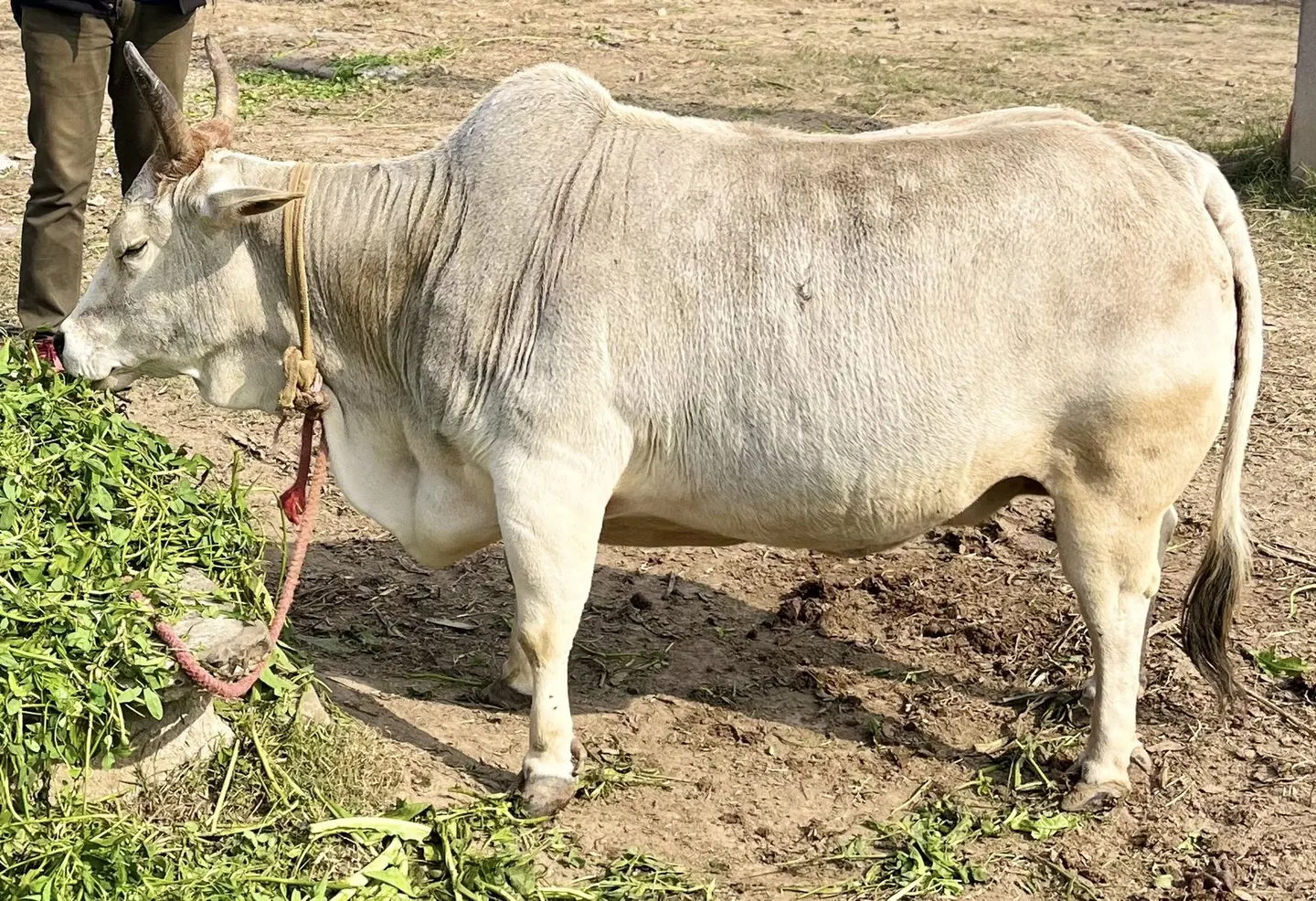
Punganur is one of the shortest cattle breeds in the world, from Punganur and the nearby taluks in the south-west corner of Andhra Pradesh (SVVU Palamaner). It is kept for light farm work and for a small amount of rich milk. NBAGR registers it as an Andhra Pradesh breed (ICAR-NBAGR), but true Punganur cattle are now rare (NBAGR–SVVU study).
How to recognise it
- Size: very short. NBAGR's averages are about 107 cm at the shoulder for bulls and 97 cm for cows. Adult bulls weigh about 240 kg and cows about 170 kg (NBAGR database); calves weigh only 10–13 kg at birth (NBAGR database, SVVU study).
- Colour: white, grey, light to dark brown, or red; some are white mixed with red or black, or white with brown or black patches (NBAGR database). The skin, muzzle, eyelids and hooves are black (NBAGR–SVVU study).
- Horns: crescent-shaped and short to medium. Bulls have stumpy horns that curve backward and then forward; cows' horns are longer and spread sideways and forward (NBAGR database, NBAGR–SVVU study).
- Head and tail: a broad, slightly dished forehead and a long tail that reaches the ground (NBAGR–SVVU study).
- Calves are often born white and brown, with a black muzzle, black hooves and a black tail switch (SVVU study).
What it is good for
- Light farm work. NBAGR lists draught and transport along with milk: the bullocks work light soils and pull small carts (NBAGR database).
- Rich milk. In SVVU's Palamaner herd, cows gave about 3 litres a day, up to about 4 litres at the peak, and about 458 litres over a lactation of about 5 months, with about 5.4% fat (SVVU study). NBAGR's record gives about 546 kg per lactation, ranging from 194 to 1,100 kg (NBAGR database).
- Low upkeep. SVVU describes the breed as known for its short size, low maintenance and fairly good milk yield (SVVU Palamaner).
- Calves. One at a time. Cows first calve at about 37 months and then about every 15 months, though the gap ranges from 10 to 27 months (NBAGR database).
Where it is mainly found
NBAGR's breed record places the home tract in Punganur taluk and the next-door taluks of Vayalpad, Madanapalle and Palamaner, all then in Chittoor district (NBAGR database). Since Andhra Pradesh redrew its districts, Punganur, Madanapalle and Vayalpad (now Valmikipuram) are in Annamayya district, and Palamaner is still in Chittoor. The breed takes its name from Punganur, whose local rulers developed it (NBAGR database).
Pure animals are very few. In 1997, a survey of 150 villages in the tract by the Palamaner station found only 21 Punganur cows; the 2013 breed survey counted 2,772 (NBAGR database). NBAGR's 2022 Breed Watchlist lists Punganur as vulnerable (Breed Watchlist), and widespread crossbreeding in the tract is the main reason (NBAGR–SVVU study). SVVU's Livestock Research Station at Palamaner was started in 1954 to revive the breed and runs a programme to conserve it in its home area (SVVU Palamaner).

Looking for Punganur cattle?
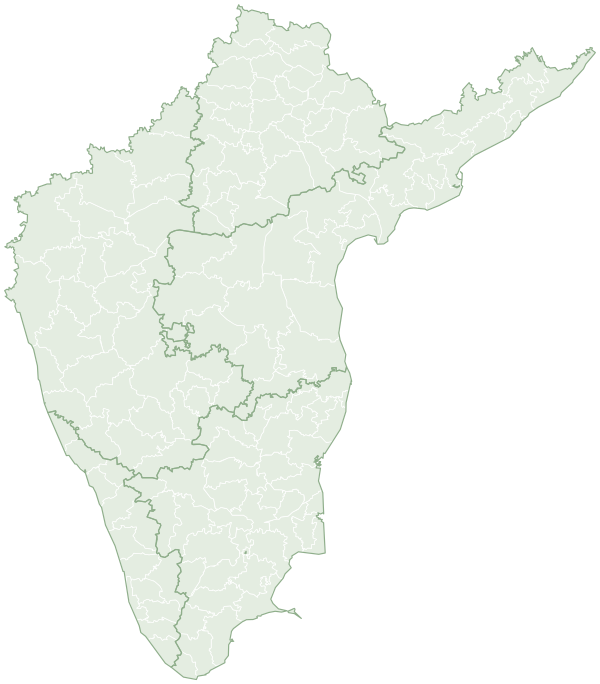
See cow ads in the districts where Punganur cattle come from, or search “Punganur” in the Kattutharai app to find them near you. The seller names the breed and Kattutharai does not check it, so look at the animal yourself before you pay.
Cow ads in its home districts, 1 Nov 2026:


Rearing tips
- Grazing by day, a small shed at night. In the home tract, women and children of the family look after the cattle. They graze on waste land near the forest, and on paddy stubble after the harvest, and spend the night in small sheds built on bamboo and stone pillars, roofed with stacks of paddy straw or groundnut haulms (NBAGR database).
- Straw and crop leftovers. Paddy straw is the main fodder, with sugarcane tops, groundnut haulms, ragi straw and mulberry leaves; milking cows get some concentrate feed at milking time (NBAGR database). For amounts, see how cattle are kept.
- Keep the calves pure. SVVU's conservation herd breeds its cows only to Punganur bulls (SVVU study). Do the same, or ask your veterinary hospital about insemination with semen from a Punganur bull.
- Health. Vaccinate on time, and ask your vet about worms and ticks: see keep cattle healthy.
Buying tips
- Check the signs: a very short animal (a cow about 97 cm at the shoulder), crescent-shaped horns, a broad, slightly dished forehead, a black muzzle, eyelids and hooves, and a tail that reaches the ground.
- Small is not proof. Crossbreeding is widespread in the tract (NBAGR–SVVU study), and SVVU's own Palamaner station once crossed Punganur cows with Kerry bulls brought from the United Kingdom (SVVU Palamaner). The breed name in an ad is the seller's word, and Kattutharai does not check it. See the mother, ask where the parents came from, and check the signs yourself.
- Never pay in advance. Because pure animals are rare, check twice, and never pay for a cow you have not seen: see paying safely.
- Known herds. Ask SVVU's station at Palamaner, or your nearest veterinary hospital, about animals from known herds (SVVU Palamaner).
- Age, health and papers: count the teeth and check health before you pay: see buying a cow or bull.
Frequently asked questions
How tall is a Punganur cow?
About 97 cm at the shoulder on average, and bulls about 107 cm. Cows weigh about 170 kg and bulls about 240 kg (NBAGR database).
How much milk does a Punganur cow give?
About 3 litres a day in SVVU's herd, and about 458 litres in a lactation, with about 5.4% fat (SVVU study).
Why are pure Punganur cattle so rare?
Mostly because of crossbreeding in the home tract (NBAGR–SVVU study). In 1997, a survey of 150 villages found only 21 Punganur cows (NBAGR database).
Is Punganur good for a beginner?
It is easy to keep: it needs little feed and space and gives rich milk for the home. But pure animals are rare, so check the animal and its parents very carefully before you buy.
Next
Compare Punganur with other small native breeds, Vechur from Kerala and Malnad Gidda from Karnataka, or with Andhra Pradesh's big Ongole. Read Cows and bulls: native breeds, crossbreds, buying and care for buying and care, and browse cows for sale and bulls for sale.