Poda Thurpu is a hardy draught breed from the Amrabad forest of Nagarkurnool district in Telangana, kept in large herds that live on forest grazing. "Poda" means spotted in Telugu, for the brown patches on its white coat, and "Thurpu" means east (NBAGR database). It is the only cattle breed NBAGR registers for Telangana (ICAR-NBAGR).
How to recognise it
- Colour: light to dark brown patches on a white coat, mostly on the sides of the body; some animals are brown with white patches (NBAGR database). In a field study, about 9 in 10 animals had the patched white coat (field study).
- Muzzle and hooves: mostly brown rather than black, in both bulls and cows (field study).
- Horns: broad at the base and mostly straight, sometimes curving back and up or pointing forward; about 30–32 cm long (NBAGR database). Most cows' horns point upward (field study).
- Head and body: a convex forehead with a deep groove down the middle in most animals, and a medium-sized, compact body (NBAGR database). Ears are held level, and most animals have a medium hump and dewlap (field study).
- Size and weight: males stand about 122 cm at the shoulder and females about 112 cm. Adult males weigh about 255 kg and females about 208 kg on average, and calves about 18–19 kg at birth (NBAGR database); apart from birth weights, these weights were estimated, not weighed (field study).
What it is good for
- Farm work. NBAGR lists draught, milk and manure as its uses. The bullocks are powerful, very good for heavy ploughing and hauling heavy carts, and quick and agile; strong, well-formed hooves let them work long hours in wet fields as well as dry ones (NBAGR database). In the field study, bullocks worked about 7.5 hours a day (field study).
- Milk. Little: about 2–3 litres a day over a lactation of about 7.5 months, about 570 kg in all, with about 3.9% fat (field study, NBAGR database).
- Young bulls to sell. Selling young males for draught brings breeders most of their income (field study).
- Calves. One at a time; twins are about 3 in 100 calvings. Cows first calve at about 50 months and then about every 12 months (NBAGR database, field study).
Where it is mainly found
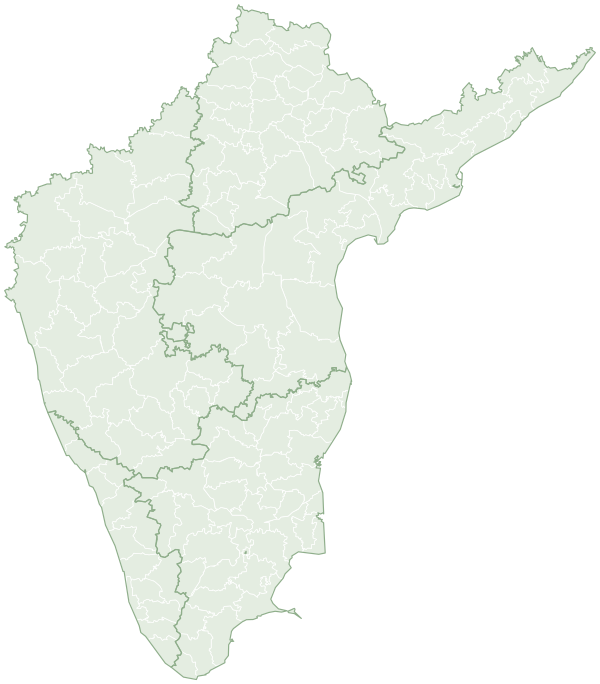
NBAGR's breed record places the breed's native home in and around the Amrabad forest: Achampet, Amrabad, Lingal and Padra mandals of Nagarkurnool district, where most of the cattle, and the purest, are found (NBAGR database). Farmers in western Telangana call the bullocks "Thurpu edlu", the eastern bullocks, because they are believed to have come from the east (NBAGR database).
About 15,000 Poda Thurpu cattle were counted in 2016 by a local organisation working with the breeders (NBAGR database). Many herds travel far to graze from January to June, to the Srisailam backwaters and as far as Guntur district in Andhra Pradesh (field study). To keep the breed pure, Telangana's animal husbandry department told insemination centres around Amrabad not to cross these cows with other breeds (field study).

Looking for Poda Thurpu cattle?
Search “Poda Thurpu” in the Kattutharai app to find Poda Thurpu cows and bulls for sale near you, or see all cows for sale. The seller names the breed and Kattutharai does not check it, so look at the animal yourself before you pay.


Rearing tips
- Forest grazing. Herds of 23 to 75 cattle graze freely in the forest; breeders give no extra feed except salt, and some move their herds with the seasons (NBAGR database). When fodder runs short, they give a little black gram and dry straw (field study).
- Hardy in drought. The breed copes with drought and lives on little fodder and water (NBAGR database). Most herds have no shed, or only a simple half-walled night shelter (field study).
- Handle with care. Forest-raised animals can be wild and aggressive, which helps them fend off predators (NBAGR database), though most are easy to handle (field study). For feed amounts on a farm, see how cattle are kept.
- Health. Breeders in the field study vaccinated their herds against foot-and-mouth disease and haemorrhagic septicaemia (field study). Vaccinate on time, and ask your vet about worms and ticks: see keep cattle healthy.
Buying tips
- Check the signs: white with brown patches (or brown with white patches), a brown muzzle and hooves, a convex forehead with a groove down the middle, horns broad at the base and mostly straight, and a medium, compact body.
- Not Bargur. Poda Thurpu looks strikingly like Tamil Nadu's Bargur cattle in coat colour, but it is a separate breed from a different home area (field study). See Bargur cattle: breed, weight and where it is found.
- Buy in the home tract. The breed name in an ad is the seller's word, and Kattutharai does not check it. See the herd, ask where the animal was born, and check the signs yourself.
- See it handled. Because forest herds can be wild, watch the animal being led and tied before you pay.
- Age, health and papers: count the teeth and check health before you pay: see buying a cow or bull.
Frequently asked questions
What does "Poda Thurpu" mean?
In Telugu, "poda" means spotted, for the brown patches on the white coat, and "thurpu" means east: farmers call the bullocks eastern bullocks because they are believed to have come from the east (NBAGR database).
How much milk does a Poda Thurpu cow give?
About 2–3 litres a day, and about 570 kg in a lactation (field study). It is a draught breed; if you want milk to sell, see native cows or crossbreds.
Is Poda Thurpu the same as Bargur?
No. They look alike in colour, and both are small, compact cattle, but they are separate breeds with different home areas: Poda Thurpu from Telangana's Amrabad forest and Bargur from Tamil Nadu (field study).
Is Poda Thurpu good for a beginner?
It suits a farmer who needs strong, quick bullocks and has grazing land. Forest-raised animals can be wild, so start with one that is used to people.
Next
Compare Poda Thurpu with Bargur from Tamil Nadu or with Andhra Pradesh's Ongole and Punganur. Read Cows and bulls: native breeds, crossbreds, buying and care for buying and care, and browse cows for sale and bulls for sale.