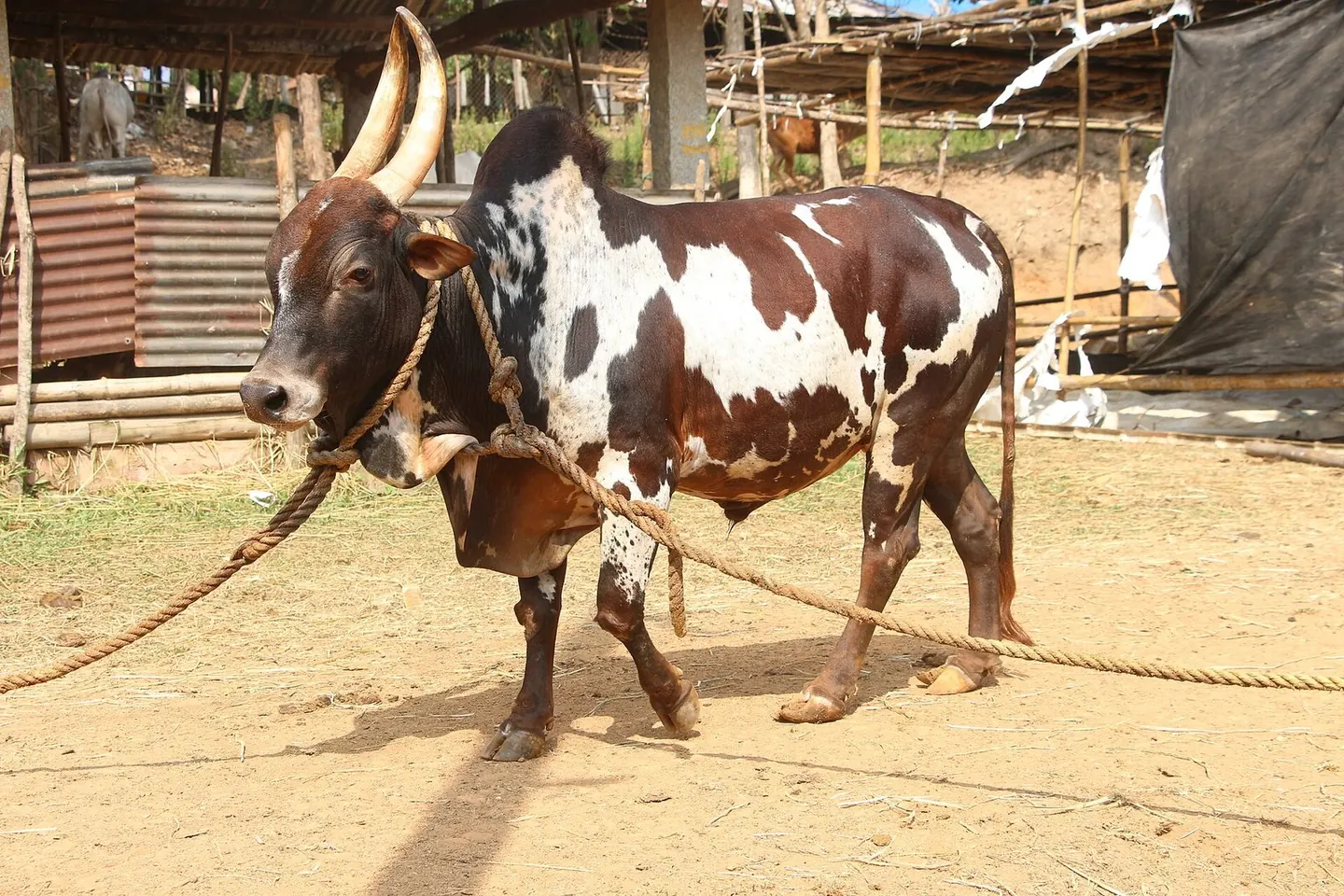
Bargur is a brown-and-white hill breed from the forests of the Bargur hills in Erode district, kept for farm work on steep, uneven land (NBAGR database). It is light, quick and hardy, but semi-wild and hard to train. It is one of Tamil Nadu's four registered cattle breeds (ICAR-NBAGR), and its numbers have fallen so far that TANUVAS counts it as endangered (TANUVAS).
How to recognise it
- Colour: red-brown with white patches. The shade runs from cherry red to light red and the amount of white varies; some animals are white or dark brown (TANUVAS study, ICAR-NBAGR, TNAU).
- Brown points: the muzzle, eyelashes and hooves are mostly brown, and the horns are light brown (TANUVAS study, ICAR-NBAGR).
- Horns: medium-sized, close together at the base, sweeping backwards, outwards and upwards with a forward curve, and sharp at the tip (ICAR-NBAGR).
- Body: medium-sized, compact and lightly built (ICAR-NBAGR, TNAU).
- Size and weight: males stand about 126 cm at the shoulder and females about 122 cm; adult males weigh about 340 kg and females about 295 kg on average (ICAR-NBAGR).
What it is good for
- Work on hill land. Bargur cattle were developed for field work on uneven, hilly land, and the bullocks are known for their speed and endurance at a trot (ICAR-NBAGR, NBAGR study).
- Manure and farm work. In the hills, the cattle are kept mostly for their dung and for draught (NBAGR study).
- Little milk. Cows give 0.5–3 litres a day after the calf has suckled (NBAGR study); NBAGR's record gives about 350 kg in a lactation (ICAR-NBAGR).
- Calves. One at a time, about every 17 months (ICAR-NBAGR).
Where it is mainly found
The home tract is small: the Bargur hills, at about 1,000 m above sea level (NBAGR study), which NBAGR's record places in Bhavani taluk of Erode district (ICAR-NBAGR); the hills are now in Anthiyur taluk (TANUVAS). The cattle spend most of the year in the forest, kept in pens called patti that hold 50–200 head. They come back to the villages for harvest work, and around January they are driven to salt licks about 43 km north of Bargur (ICAR-NBAGR).
Numbers fell from 95,400 in 1977 to 12,106 in 2019, with fewer than 10,000 pure breeding cows left (TANUVAS).

Looking for Bargur cattle?
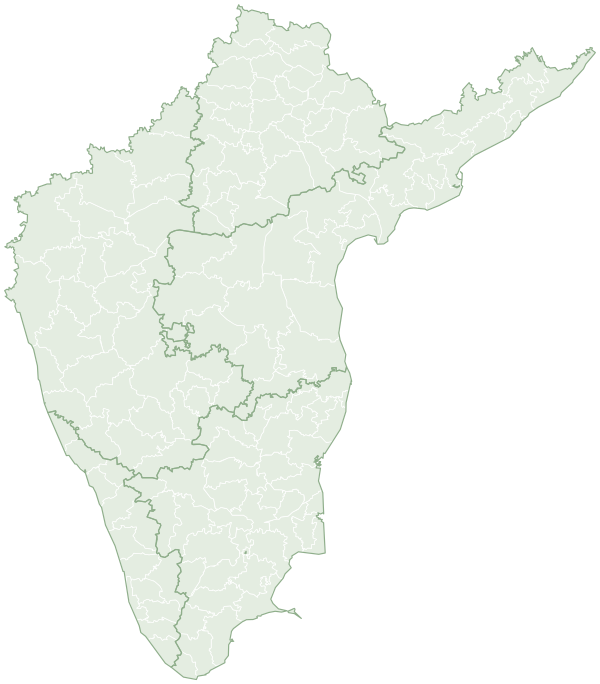
See cow ads in the districts where Bargur cattle come from, or search “Bargur” in the Kattutharai app to find them near you. The seller names the breed and Kattutharai does not check it, so look at the animal yourself before you pay.
Cow ads in its home districts, 1 Nov 2026:


Rearing tips
- Forest grazing, almost no bought feed. In the hills, Bargur cattle live on forest grazing with almost no inputs (NBAGR study). Away from the forest, plan green and dry fodder and mineral mixture: see how cattle are kept.
- Calm, patient handling. The cattle are sensitive and fiery, hard to train and wary of strangers (ICAR-NBAGR, TNAU). Train young bullocks early and patiently, and keep strong fences.
- Health. Vaccinate on time, and ask your vet about worms and ticks: see keep cattle healthy.
Buying tips
- Check the signs: a red-brown coat with white patches, a brown muzzle and hooves, light-brown horns close together at the base, and a compact, light body.
- Not for a first-timer. A semi-wild, fiery animal needs an experienced handler and good grazing.
- Pure animals are few. The breed lives in a small area around Bargur. TANUVAS's Bargur Cattle Research Station keeps a pure herd of about 125 head and aims to supply breeding stock to farmers of the tract (TANUVAS).
- Crosses are common. The breed name in an ad is the seller's word, and Kattutharai does not check it. See the herd, and check the signs yourself.
- Age, health and papers: see buying a cow or bull.
Frequently asked questions
Is Bargur cattle the same as the Bargur buffalo?
No. NBAGR registers Bargur cattle and the Bargur buffalo as two separate breeds, both from the Bargur hills of Erode district (NBAGR buffalo register).
Is Bargur good for a beginner?
Usually not. The cattle are semi-wild and fiery, and they do best with experienced herders near forest grazing.
How much milk does a Bargur cow give?
Only 0.5–3 litres a day after the calf has suckled (NBAGR study).
How many Bargur cattle are left?
About 12,106 in a 2019 count of the home tract, with fewer than 10,000 pure breeding cows (TANUVAS).
Next
Compare Bargur with Tamil Nadu's other native breeds, Kangayam, Umblachery and Pulikulam. Read Cows and bulls: native breeds, crossbreds, buying and care for buying and care, and browse cows for sale and bulls for sale.