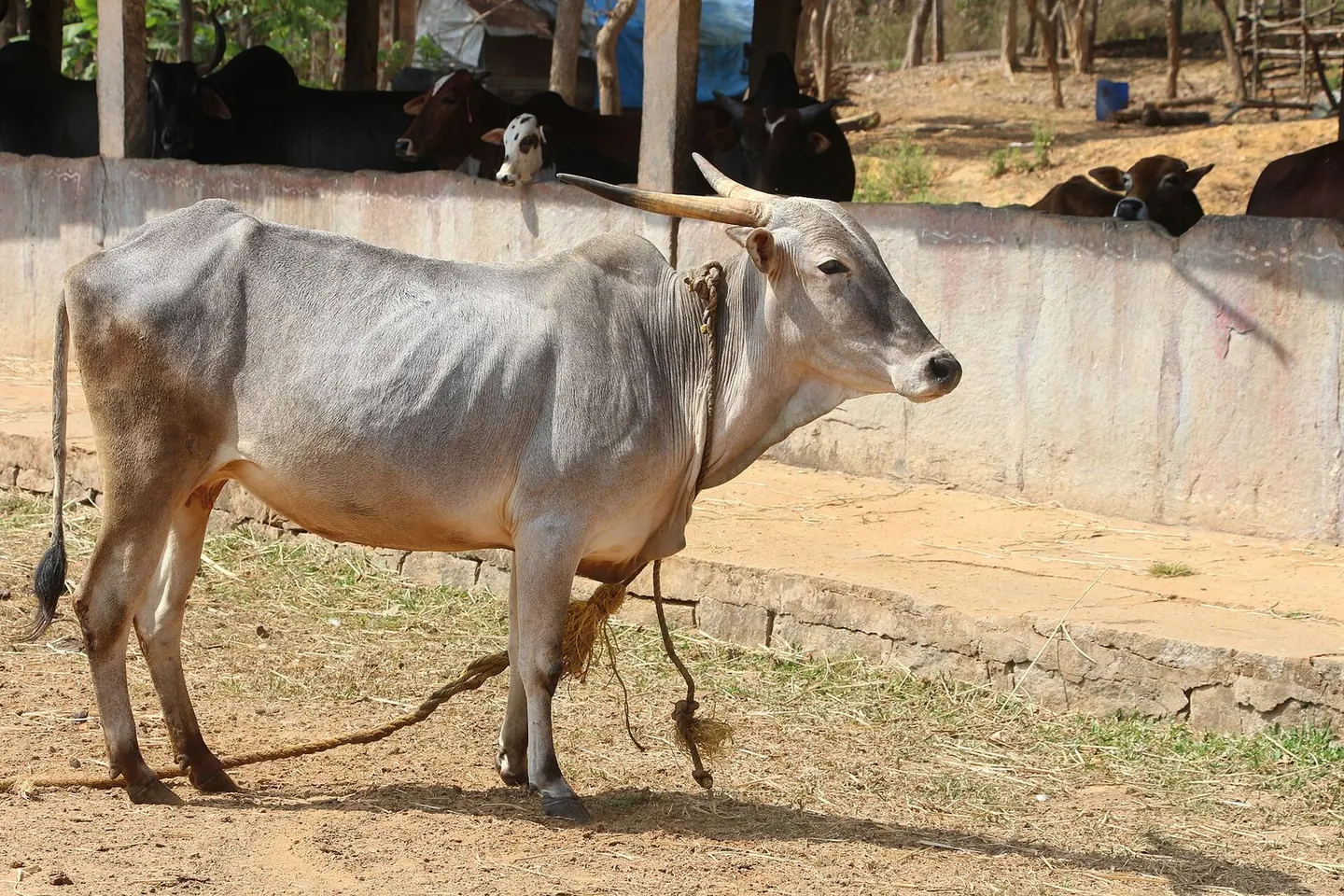
Amritmahal is a grey draught breed of central Karnataka, first bred in the herds of the Mysore kingdom and known for its power, endurance and quick pace on the road. It is one of Karnataka's registered cattle breeds (ICAR-NBAGR). Farmers value it for farm work; the cows give little milk.
How to recognise it
- Colour: grey, varying from nearly white to nearly black. Bulls are darker on the neck, shoulders, hump and hindquarters, and some animals have white or grey markings on the face and dewlap (NBAGR database). The muzzle and the tail switch are black, and the skin is thin, tight and black (NBAGR study).
- Head and horns: a long head that narrows towards the muzzle, with a furrow down the middle of the forehead. The horns are long. They rise close together from the top of the head, go up and back, then turn inwards and end in sharp black points that sometimes nearly touch (NBAGR database, NBAGR study).
- Body: small ears held level, a well-developed hump carried slightly forward, and a fine dewlap that does not hang far (NBAGR study).
- Size and weight: males stand about 133 cm at the shoulder and females about 126 cm. NBAGR's record gives average weights of about 500 kg for males and about 320 kg for females (NBAGR database).
- Temperament: fiery and active (NBAGR database). Herds that live free on open pasture can be impatient and wild (KVAFSU).
What it is good for
- Farm work and carting. Amritmahal is a draught breed known for power and endurance, and its bullocks are suited to trotting and quick transport (NBAGR database). Before independence, the Mysore rulers kept these cattle for transport, army and farm work (KVAFSU).
- Milk. Little. NBAGR records about 572 kg of milk in a lactation (NBAGR database). In a 2017–18 ICAR survey in Hassan district, farmers reported about 3 litres a day per cow (ICAR survey).
- Calves. One at a time. Cows usually have their first calf at about 4 years of age and then one about every 14–18 months (NBAGR database, ICAR survey).
Where it is mainly found
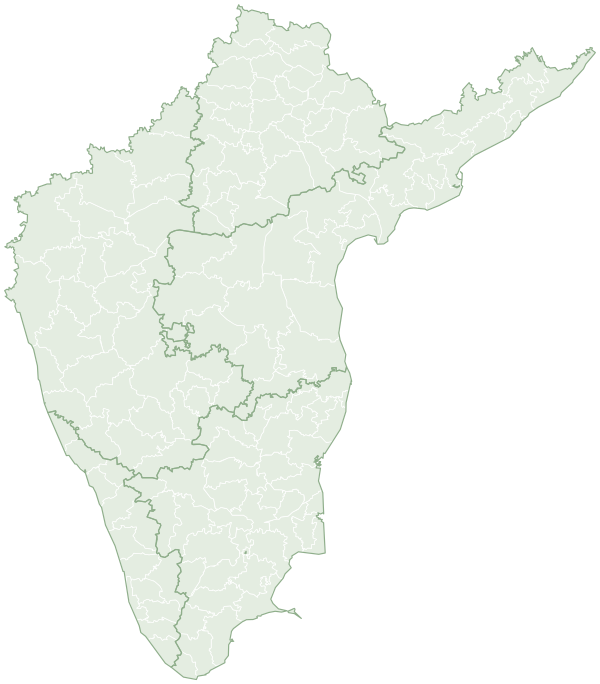
NBAGR's breed record places the home tract in central Karnataka: Chikkamagaluru, Chitradurga, Hassan, Shivamogga, Davanagere and Tumakuru districts (NBAGR database). The breed grew out of the royal cattle establishment of Mysore. It began with Hallikar cows that a Vijayanagara viceroy brought to Srirangapatna. The Mysore rulers added cattle, set aside grazing lands called kavals and named the establishment Benne Chavadi; Tipu Sultan renamed it Amrit Mahal and made rules for breeding the herd (Karnataka AH department, KVAFSU).
Today the Karnataka Animal Husbandry Department keeps Amritmahal herds on kaval grassland at its breeding centre at Ajjampura in Chikkamagaluru district and at sub-centres in Chikkamagaluru, Chitradurga and Hassan districts (Karnataka AH department). KVAFSU keeps a herd at its research centre at Konehalli near Tiptur, Tumakuru district (KVAFSU). In the 2013 breed survey, about 1,05,000 cattle in Karnataka were pure Amritmahal and about 1,24,000 more were graded, part-Amritmahal animals (NBAGR study).

Looking for Amritmahal cattle?
Search “Amritmahal” in the Kattutharai app to find Amritmahal cows and bulls for sale near you, or see all cows for sale. The seller names the breed and Kattutharai does not check it, so look at the animal yourself before you pay.


Rearing tips
- Grazing first. NBAGR describes the breed as kept on grazing, out in the open, with trees as the only shelter from sun and rain, in small herds (NBAGR database). The department's centres grow fodder and protect the grass and fodder trees on their kaval land (Karnataka AH department). On a small farm, plan grazing plus dry and green fodder: see how cattle are kept.
- Handle gently. An animal raised free on pasture needs time to get used to people, ropes and a shed. Keep children away from newly bought cattle.
- Do not skip the basics. In the ICAR survey of Karnataka's six native breeds, almost all farmers grazed their cattle by day and fed hay and green fodder at home, but only about a quarter gave a mineral mixture, about half vaccinated and about a third dewormed their cattle (ICAR survey).
- Health. Vaccinate on the official schedule and ask your vet about worms and ticks: see keep cattle healthy.
Buying tips
- Check the signs: grey colour, darker on a bull; black muzzle and tail switch; a long, narrow face with a furrowed forehead; and long horns rising close together with sharp black tips. Short or wide-set horns, a big hanging dewlap or long drooping ears do not fit the breed's description and point to a cross.
- Crosses are common. In the breed survey, graded animals outnumbered pure ones (NBAGR study). The breed name in an ad is the seller's word, and Kattutharai does not check it. See the mother and the herd, and check the signs yourself.
- Pure bull calves at auction. The department's Amritmahal centres sell pure bull calves to farmers by auction (Karnataka AH department). Ask your nearest veterinary hospital when the next auction is.
- See it handled. Watch the animal being led, tied and loaded before you pay; a fiery animal can be hard to manage at first.
- Age, health and papers: count the teeth, check health and get the ear tag number on your receipt: see buying a cow or bull.
Frequently asked questions
Is Amritmahal a milk breed?
No, it is a draught breed. Cows give about 3 litres a day by farmers' estimates, and about 572 kg in a lactation by NBAGR's record. If you want milk to sell, see native cattle or crossbreds.
How heavy is an Amritmahal bull?
About 500 kg on average for an adult male, and about 320 kg for a female, by NBAGR's record (NBAGR database).
What does the name mean?
KVAFSU explains "amrit" as milk and "mahal" as house. The Mysore rulers' cattle establishment was earlier called Benne Chavadi, the source of butter (KVAFSU, Karnataka AH department).
Next
Compare Amritmahal with Hallikar, the breed its royal herd began with, and with Khillari of north Karnataka. Read Cows and bulls: native breeds, crossbreds, buying and care for buying and care, and browse cows for sale and bulls for sale.