Cattle are kept all over South India for milk, farm work and calves. This page compares native cattle (nattu maadu) with crossbreds, lists each state's breeds, and shows what to check before you buy and how to keep cattle healthy. To start or run a dairy farm, read the dairy farming guide.
What cattle are kept for
- Milk. A cow gives milk for some months after each calf. Crossbreds give the most; most native draught cows give little more than the calf and the family need.
- Farm work. Bullocks plough, pull carts and haul loads; most native breeds of the south were bred for this work (NBAGR database).
- Calves and manure. Cows raise heifers and male calves, and the dung goes back to the fields.
Native cattle or crossbreds?
Choose by the feed, water and care you can give, not by milk alone (NBAGR database, TNAU).
| Native cattle | Crossbred cows | |
|---|---|---|
| Milk in a lactation | Tamil Nadu's draught breeds about 350–540 kg; native dairy breeds such as Gir and Sahiwal about 2,100–2,300 kg | A first cross with Jersey can give 2–3 times the milk of its local mother |
| Feed | Grazing, straw and crop leftovers | Green fodder, concentrate feed and mineral mixture every day |
| Heat | Suited to the local climate | Feel the heat more; Holstein crosses suit cooler hills, Jersey crosses the plains |
| Best for | Farm work, low-cost keeping, raising bullocks | Selling milk, where fodder and a vet are close at hand |
TNAU advises crossbreds with about half exotic blood, which keep more of the native cow's tolerance of heat (TNAU). Crossbreds also need one vaccine that native cattle do not: see keep cattle healthy.
How cattle are kept in South India
- Shed. Most cattle are tied on an earth floor near the house. A better shed has a dry, non-slip floor with about 65–70 square feet per adult cow, and a tiled roof or iron sheets painted silver on top, which stay cooler than bare iron (TNAU).
- Grazing. Native cattle graze common land and harvested fields; some breeds, such as Pulikulam, live in big grazing herds.
- Stall-fed milking cows. As a guide, a crossbred cow giving 6–7 litres a day needs about 20–25 kg of green fodder, 5–6 kg of dry fodder and 3–3.5 kg of concentrate feed a day: about 1 kg of concentrate for every 2.5–3 kg of milk, with mineral mixture as 2% of the concentrate (TNAU). Keep clean water in front of them always.
- Grow fodder. TANUVAS's Pulikulam research station grows hybrid Napier grass (CO-5), fodder sorghum (CoFS 29), desmanthus, agathi and subabul for its cattle (TANUVAS).
Native cattle of Tamil Nadu
Tamil Nadu has four registered cattle breeds, all bred mainly for farm work (ICAR-NBAGR):
Cattle
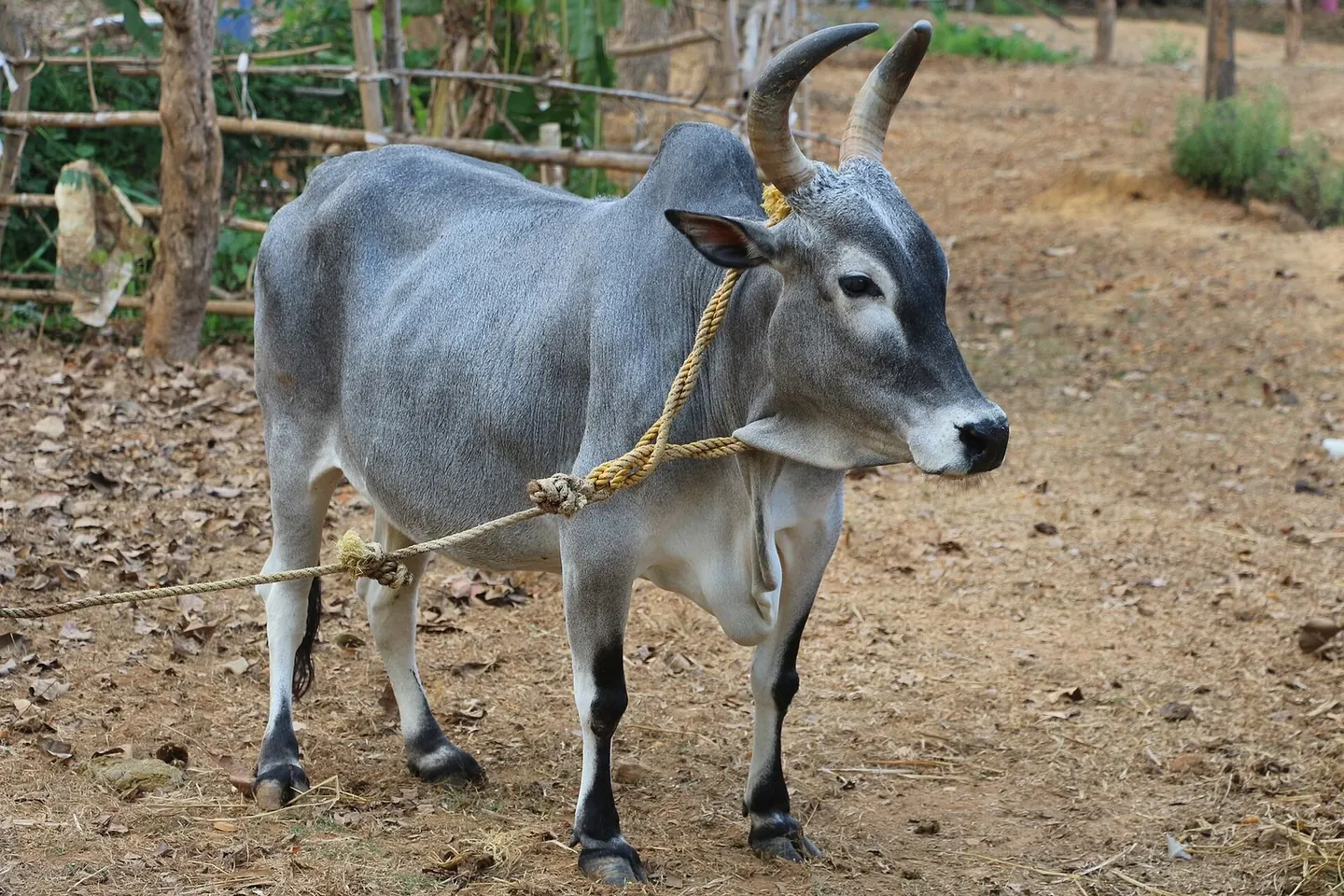
Kangayam
a grey draught breed with long, curving horns, from Kangayam and the dry districts around it: Tiruppur, Erode, Karur and Dindigul.
Bull 540 kg · Cow 380 kg
Cattle
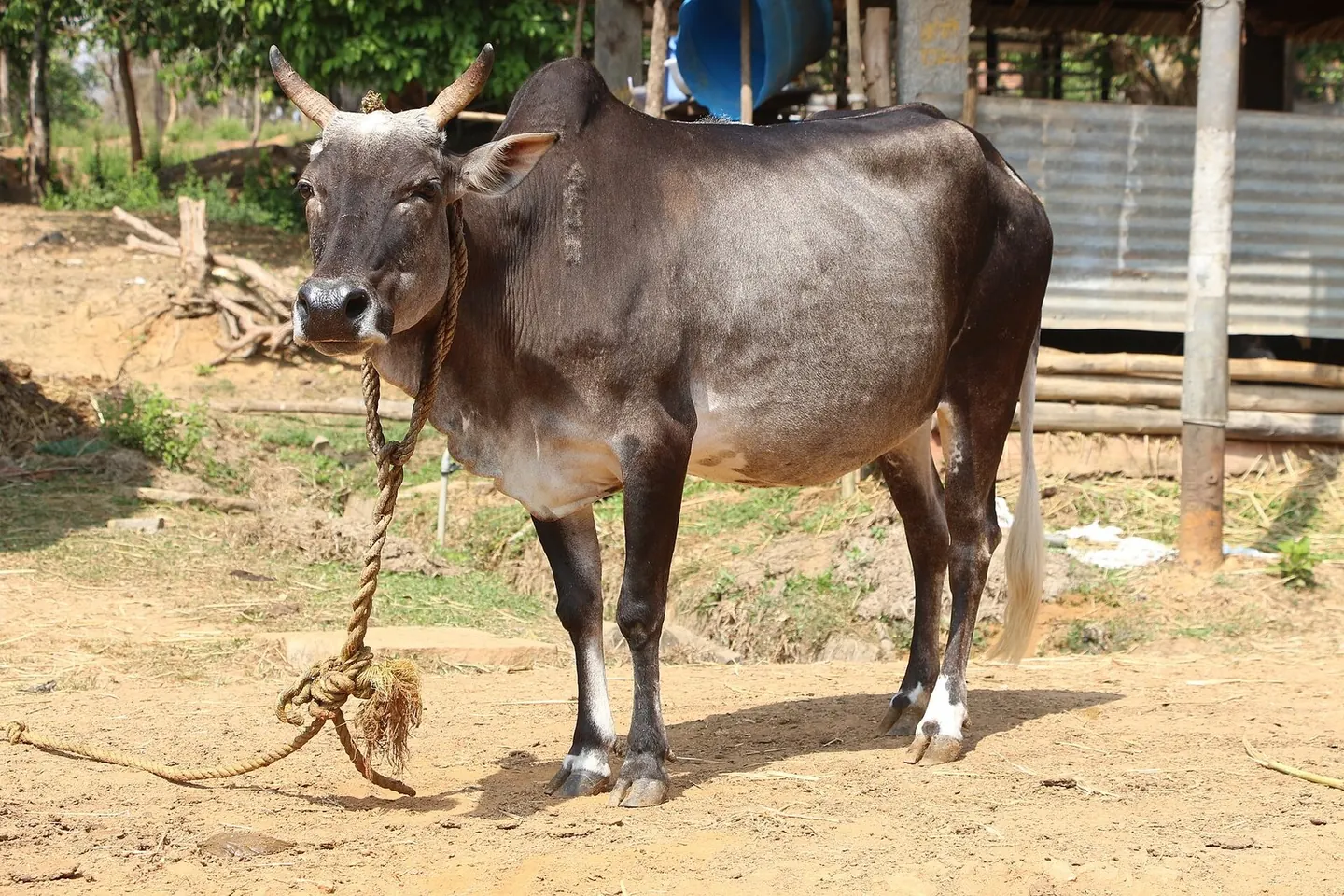
Umblachery
a small grey draught breed with white marks on the face and legs, bred for wet paddy fields in Tiruvarur and Nagapattinam.
Bull 297 kg · Cow 219 kg
Cattle
Pulikulam
a small draught breed kept in big grazing herds in Madurai, Sivaganga and Virudhunagar, valued for its manure.
Bull 259 kg · Cow 208 kg
Cattle
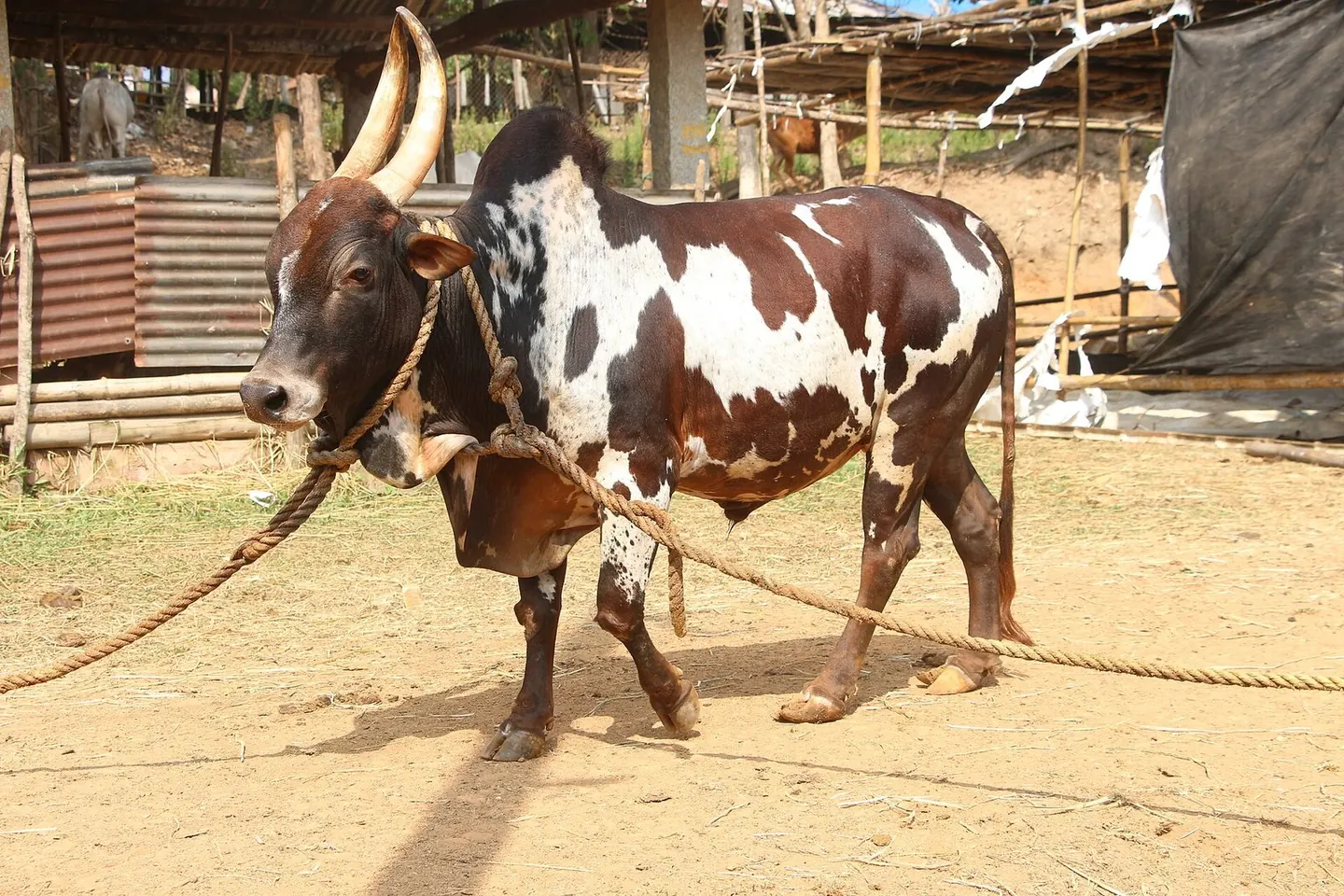
Bargur
a brown-and-white draught breed of the Bargur hills in Erode district, built for work on steep land.
Bull 340 kg · Cow 295 kg
Farmers also know Alambadi cattle, a dark-grey draught type from Dharmapuri district; TANUVAS researchers describe it as a breed still to be characterised, and it is not on NBAGR's register (TANUVAS study, ICAR-NBAGR).
Native cattle of Karnataka
Karnataka's registered breeds are mostly draught cattle; Khillari and Deoni are shared with Maharashtra (ICAR-NBAGR):
Cattle
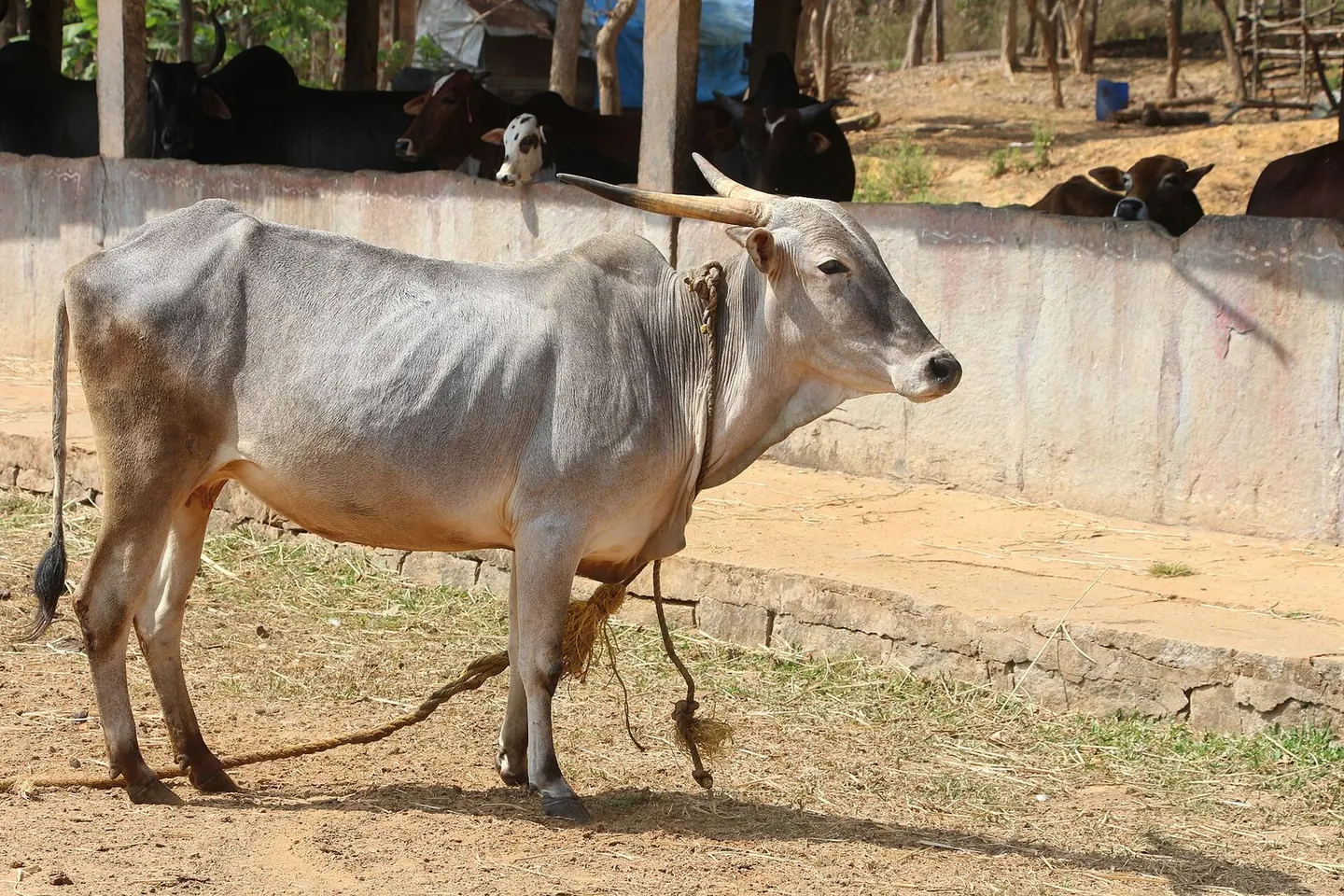
Amritmahal
a grey draught breed known for power and endurance, first bred in the Mysore rulers' herds; found around Chitradurga, Hassan and Shivamogga.
Bull 500 kg · Cow 320 kg
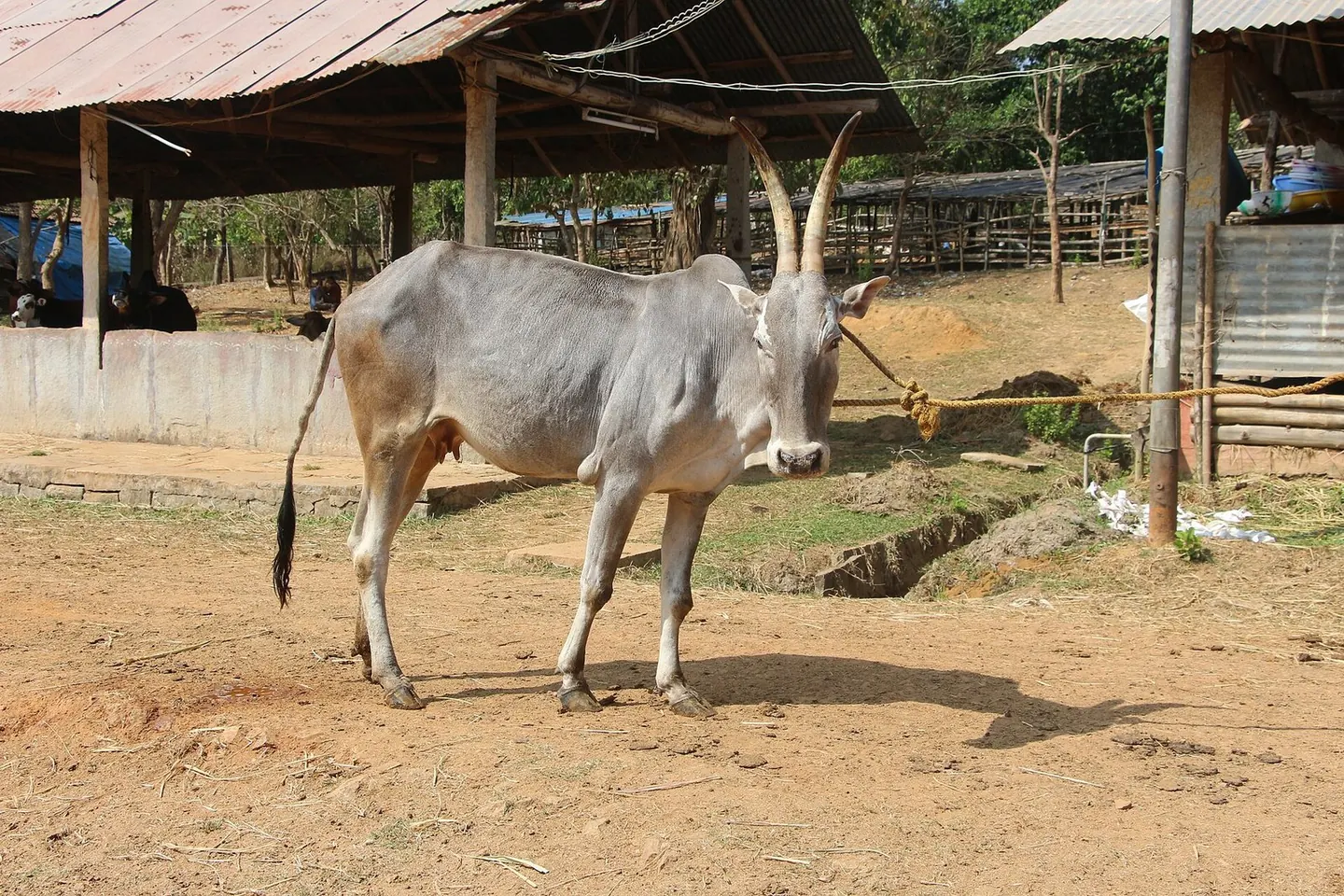
Cattle
Hallikar
a white-to-grey draught breed of south Karnataka, around Tumakuru, Mysuru, Mandya and Hassan.
Bull 340 kg · Cow 230 kg
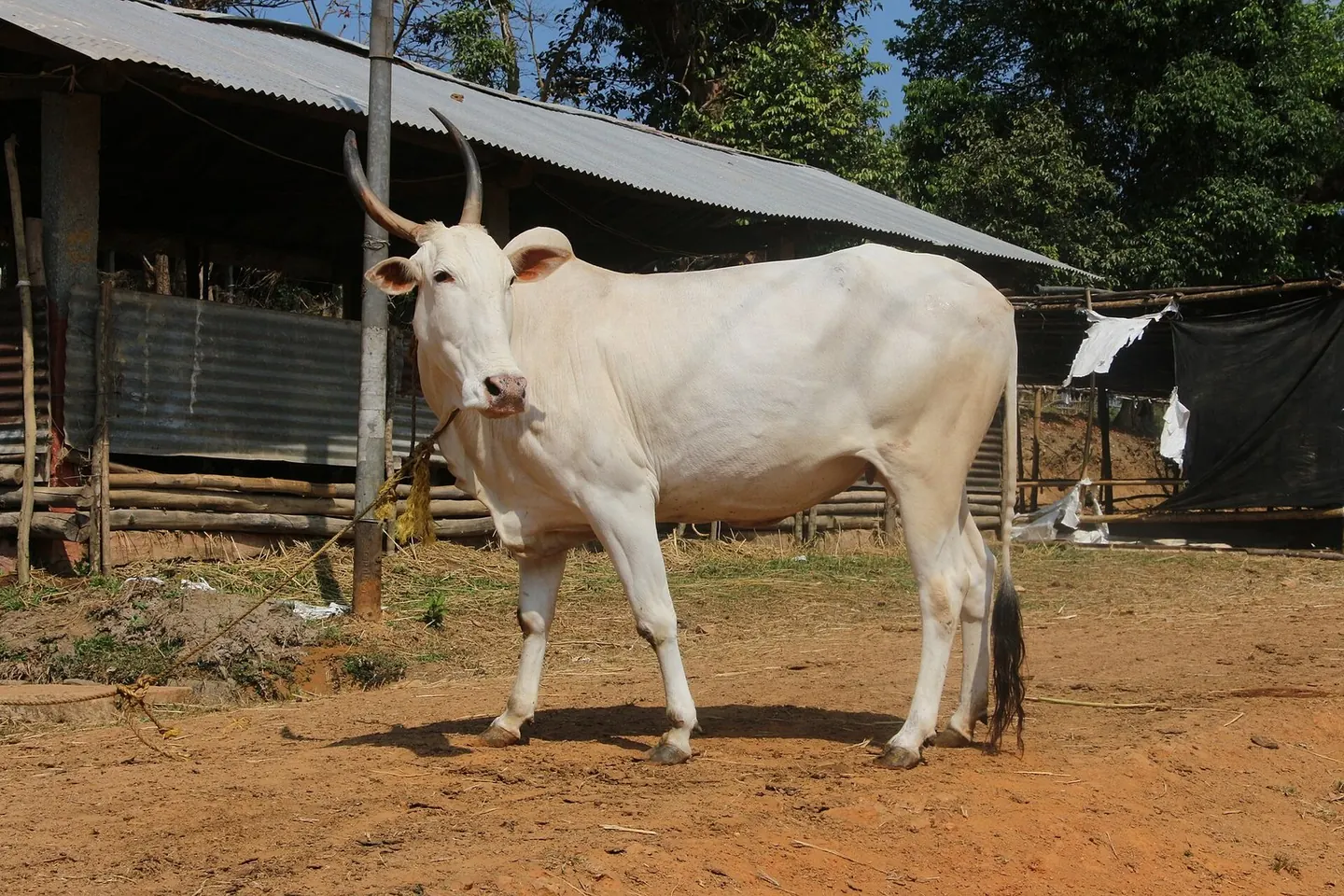
Cattle
Khillari
a grey-white draught breed with long horns, known for quick work, from north Karnataka (Belagavi, Vijayapura, Bagalkote) and south Maharashtra.
Bull 270 kg · Cow 220 kg
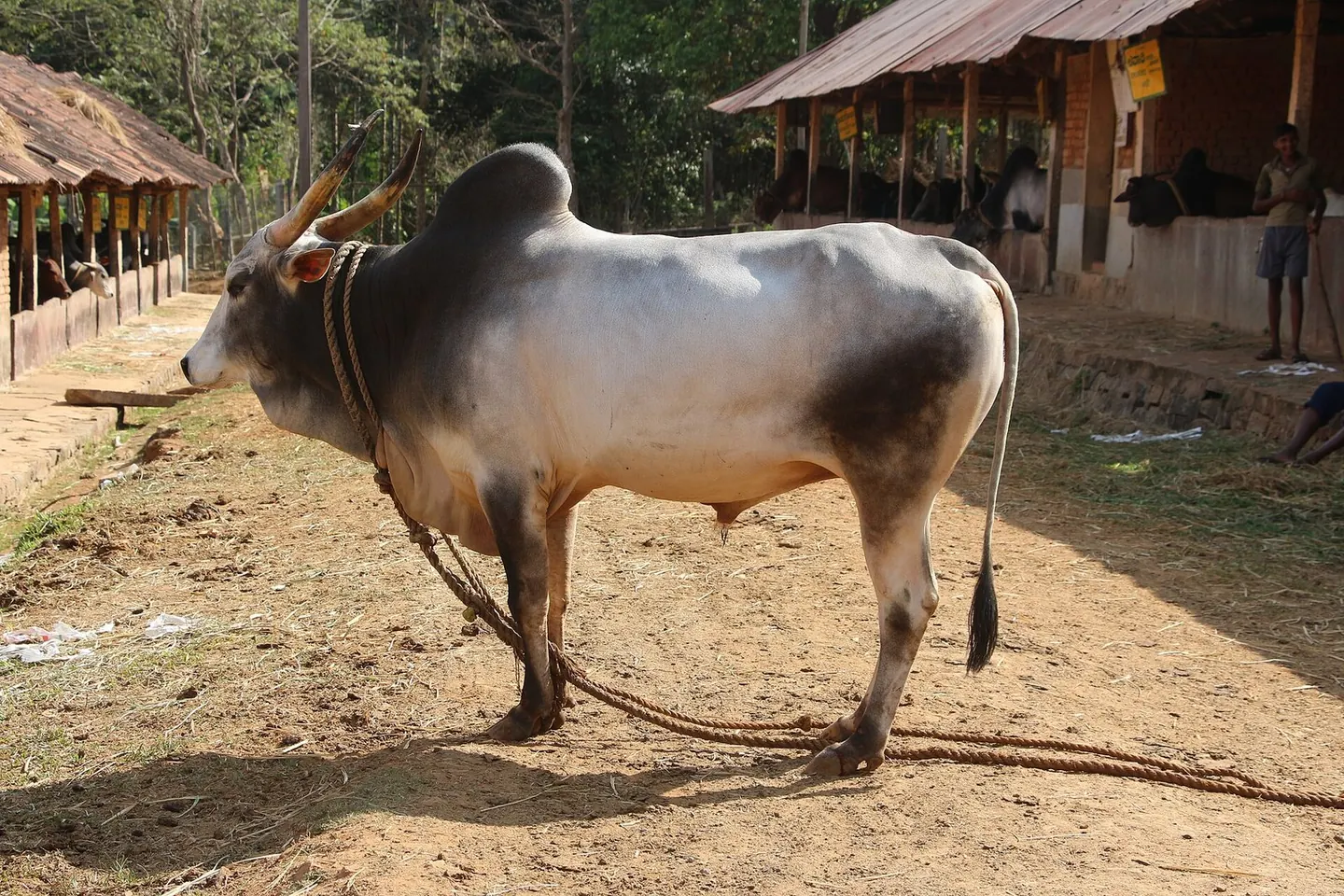
Cattle
Krishna Valley
a big, heavy draught breed of the black-cotton soils of the Krishna basin: Belagavi, Vijayapura, Raichur and the bordering parts of Maharashtra.
Bull 550 kg · Cow 325 kg
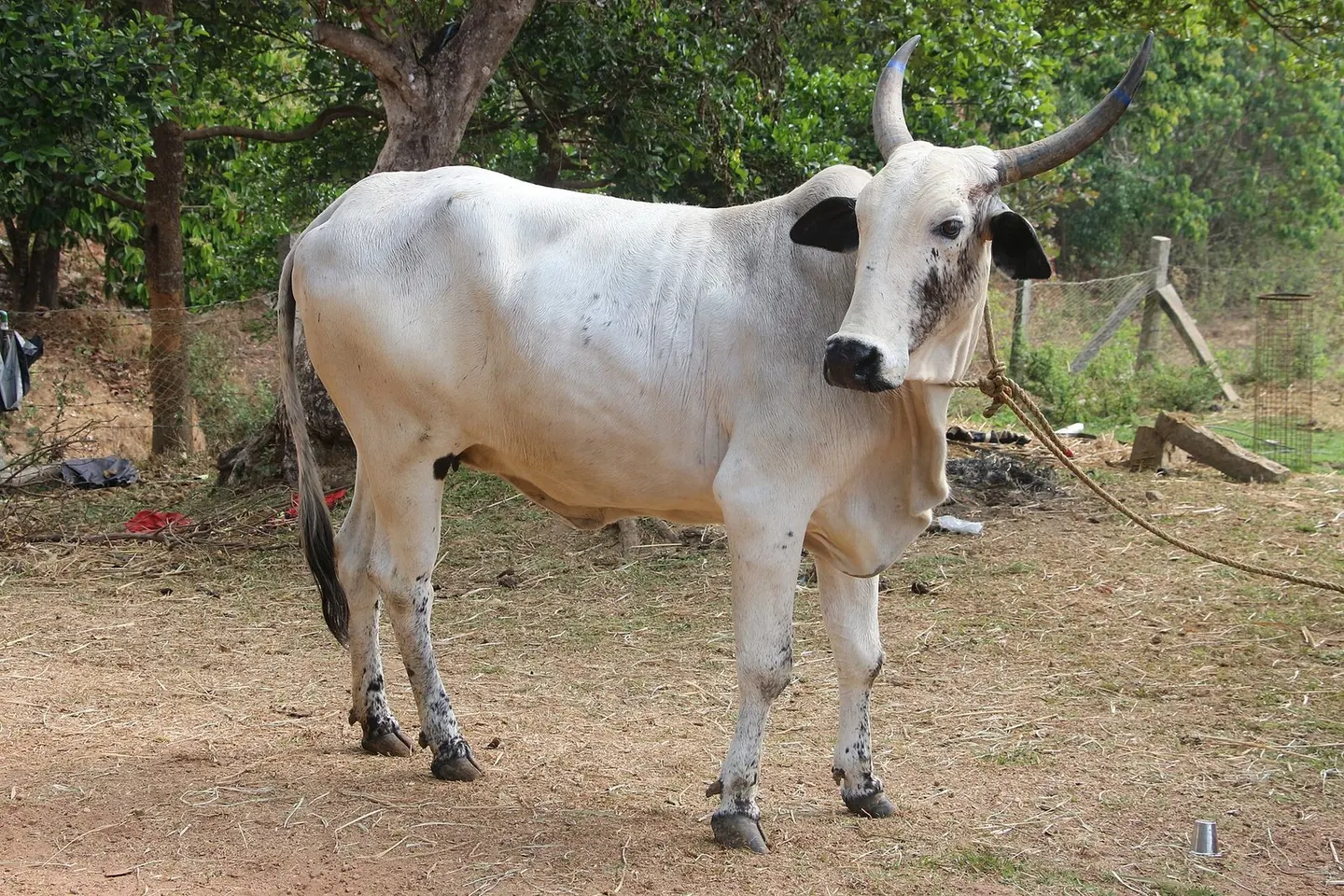
Cattle
Deoni
a black-and-white spotted breed kept for milk and farm work, from Bidar district and the Latur area of Maharashtra.
Bull 590 kg · Cow 340 kg
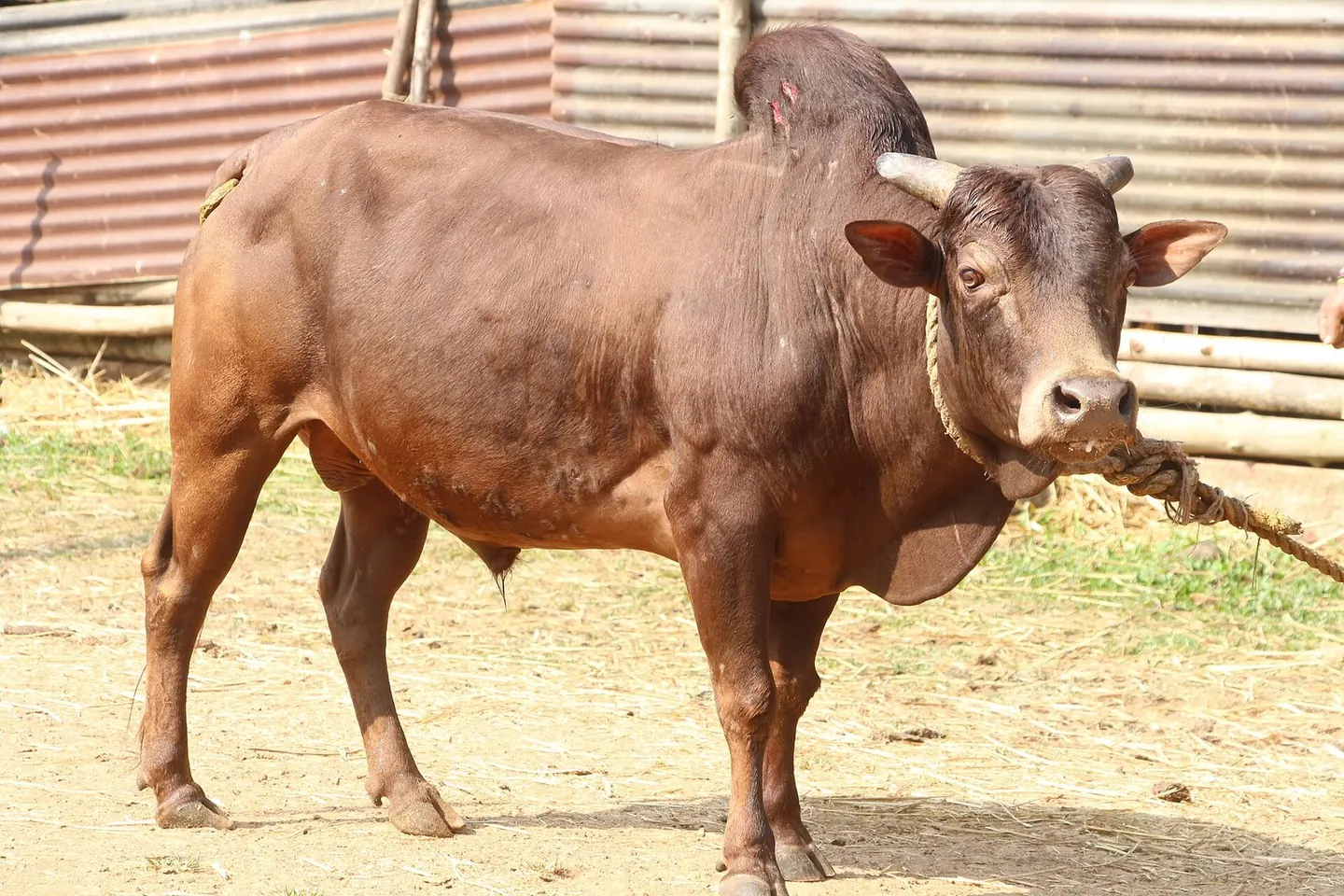
Cattle
Malnad Gidda
a small, mostly black cow of the hilly, high-rainfall Malnad districts, kept for milk, farm work and manure.
NBAGR has also registered Koppal cattle from Karnataka (ICAR-NBAGR).
Native cattle of Kerala
Kerala has two registered breeds, Vechur and Periyar (ICAR-NBAGR):
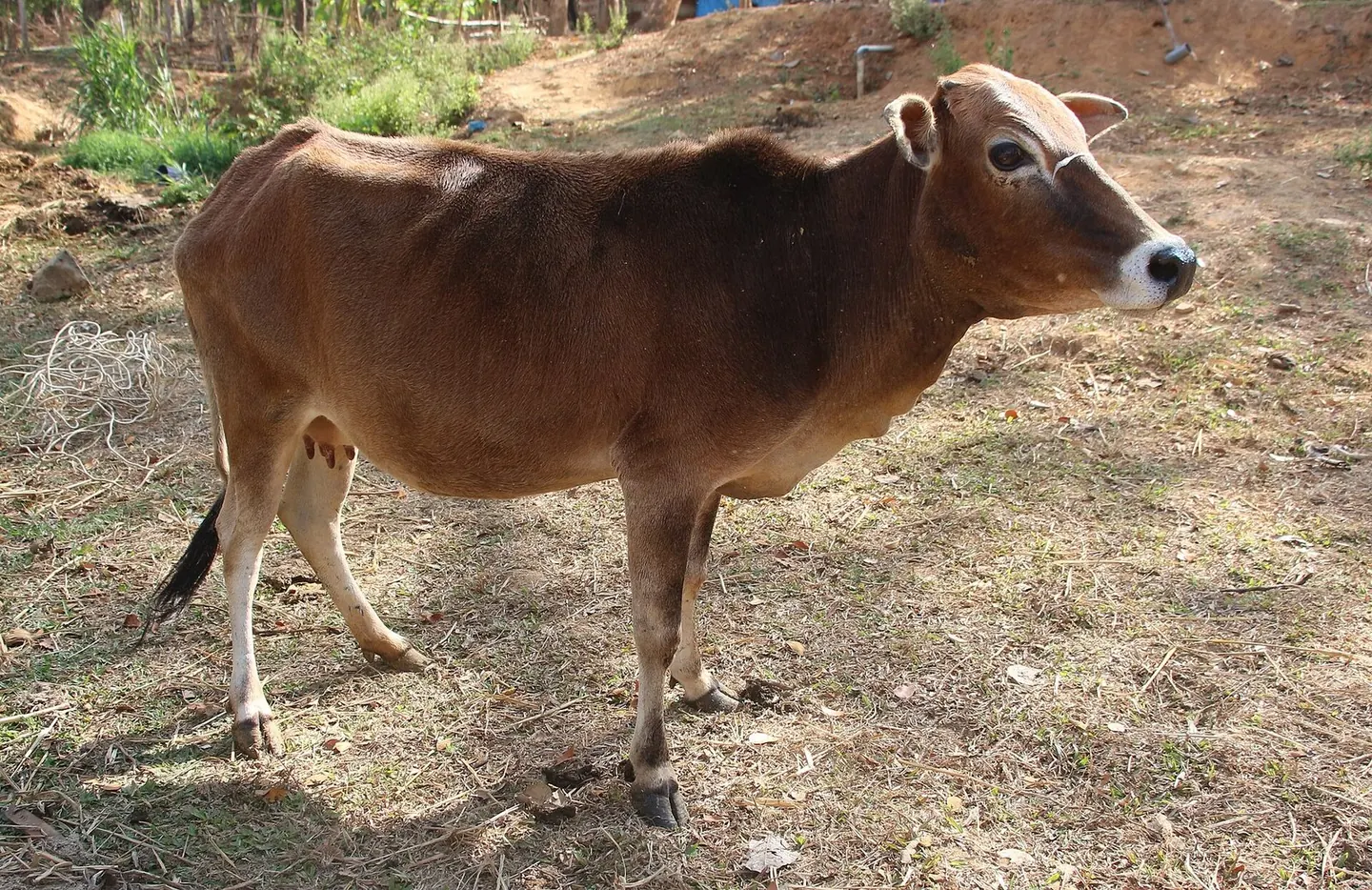
Cattle
Vechur
a very small cow kept for milk and manure, from the Kuttanad area (Kottayam, Alappuzha, Pathanamthitta) and Kasaragod.
Bull 178 kg · Cow 132 kg
NBAGR's Vechur record counts Kasaragod district in that breed's home area; the small Kasaragod cattle are not registered as a breed of their own (NBAGR database, ICAR-NBAGR).
Native cattle of Andhra Pradesh and Telangana
Andhra Pradesh has two registered breeds of its own and Telangana one (ICAR-NBAGR):
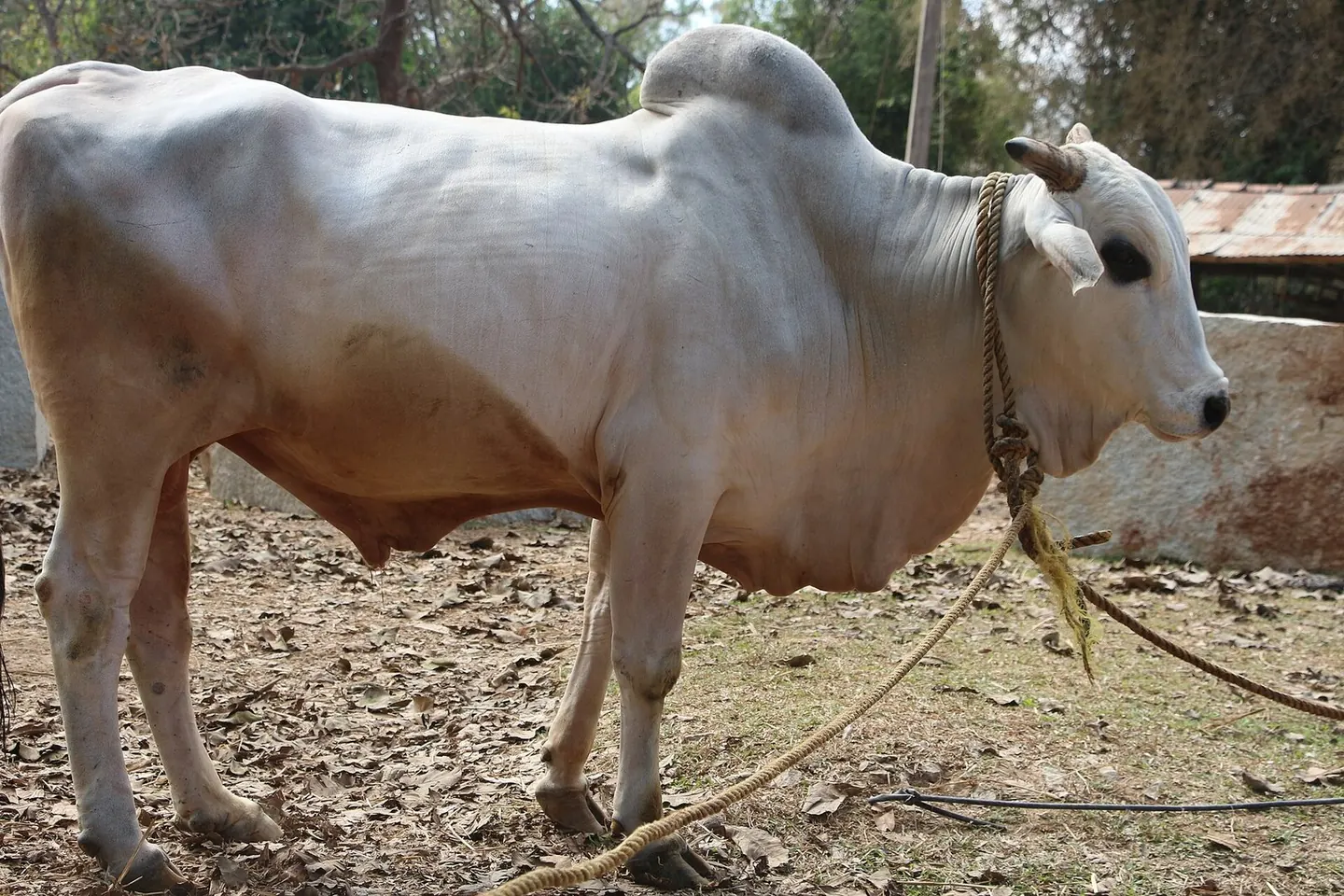
Cattle
Ongole
a large white breed with a big, fleshy dewlap, kept for farm work and milk, from coastal Andhra Pradesh: Prakasam, Guntur, Nellore and nearby districts.
Bull 434 kg · Cow 382 kg
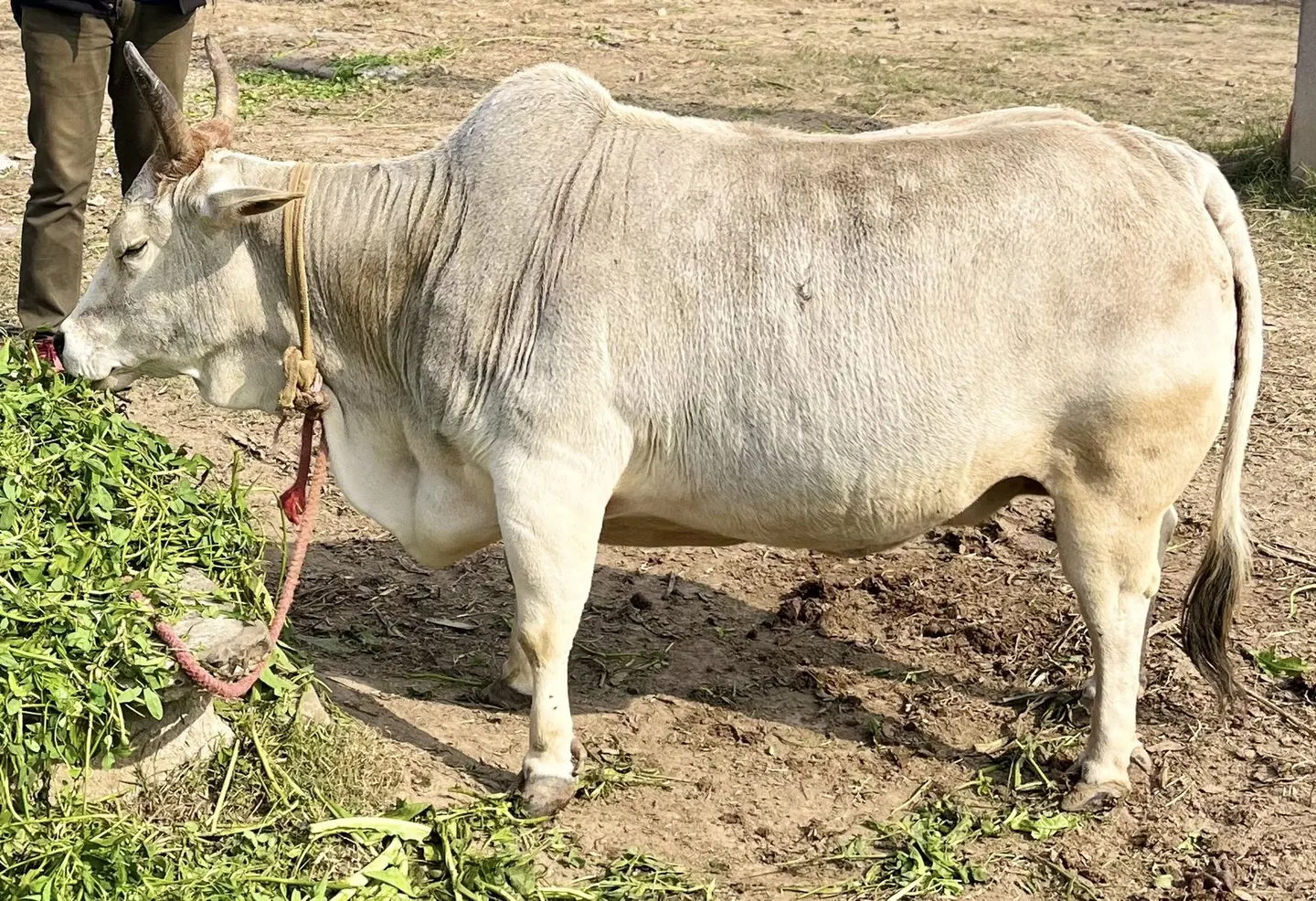
Cattle
Punganur
a very short breed from Punganur and nearby taluks of the old Chittoor district, kept for farm work and milk.
Bull 240 kg · Cow 170 kg
Cattle
Poda Thurpu
Telangana's breed: a strong draught breed with brown patches on a white coat, from the Amrabad forest area of Nagarkurnool district.
Bull 255 kg · Cow 208 kg
Motu, a small brown breed of Odisha, is also registered for the bordering parts of Andhra Pradesh (NBAGR database).
Dairy breeds from elsewhere
These native dairy breeds come from north-west India and Pakistan (NBAGR database):
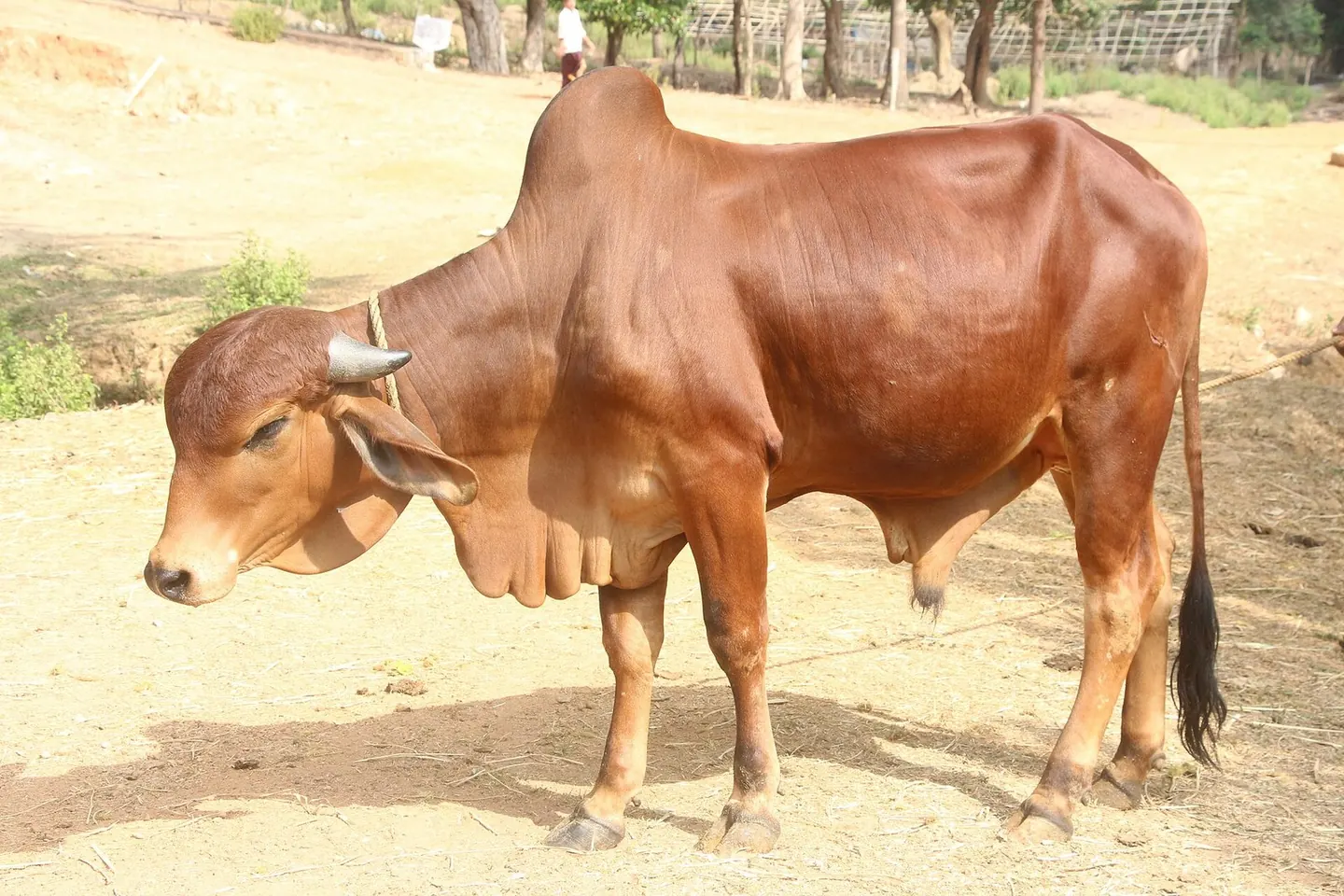
Cattle
Gir
a red or speckled-red milk breed with long, folded, hanging ears, from the Gir forest area of Saurashtra in Gujarat.
Bull 544 kg · Cow 310 kg
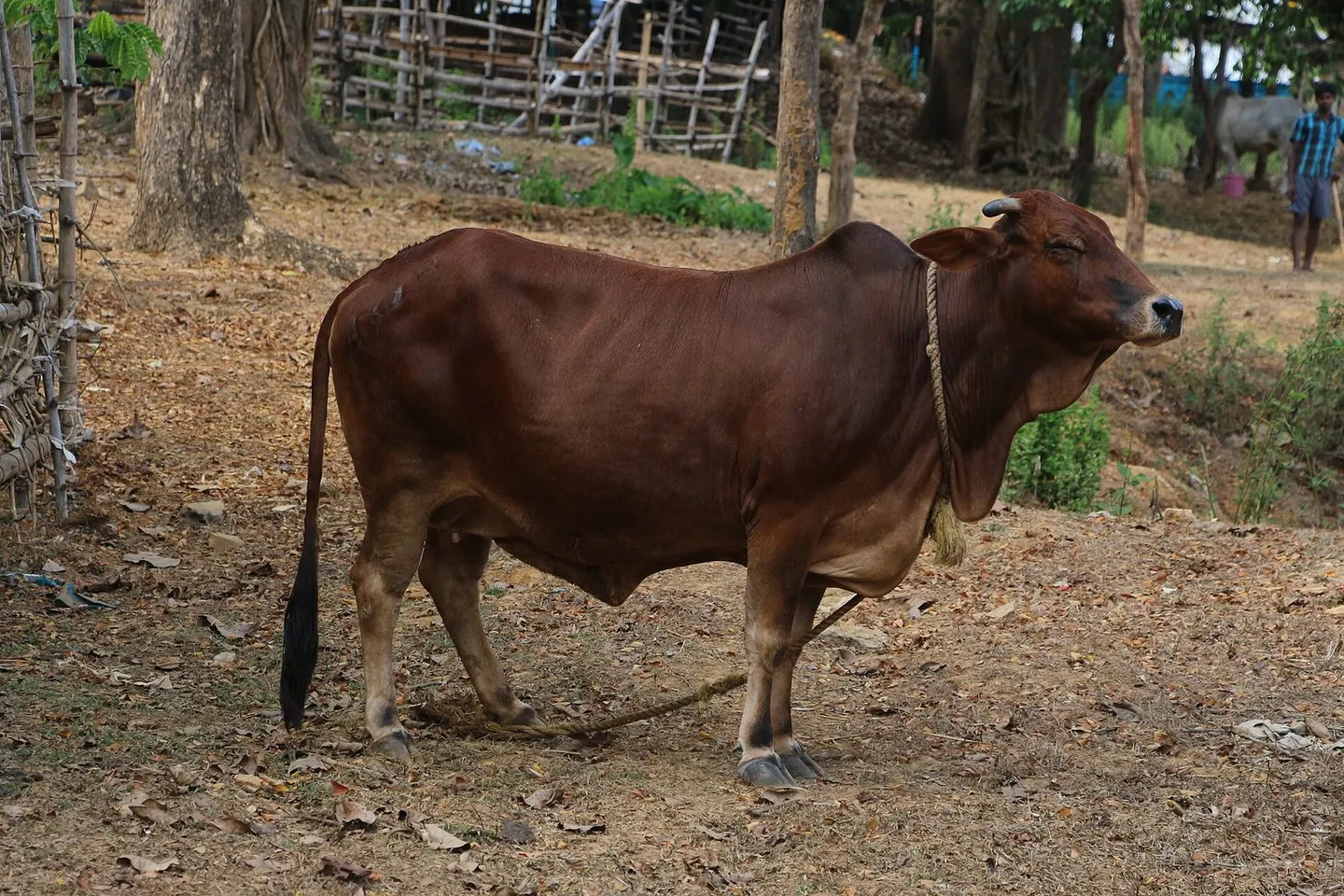
Cattle
Sahiwal
a reddish-brown milk breed with loose skin, named after Sahiwal in Pakistan; NBAGR registers it for Punjab and Rajasthan.
Bull 540 kg · Cow 327 kg
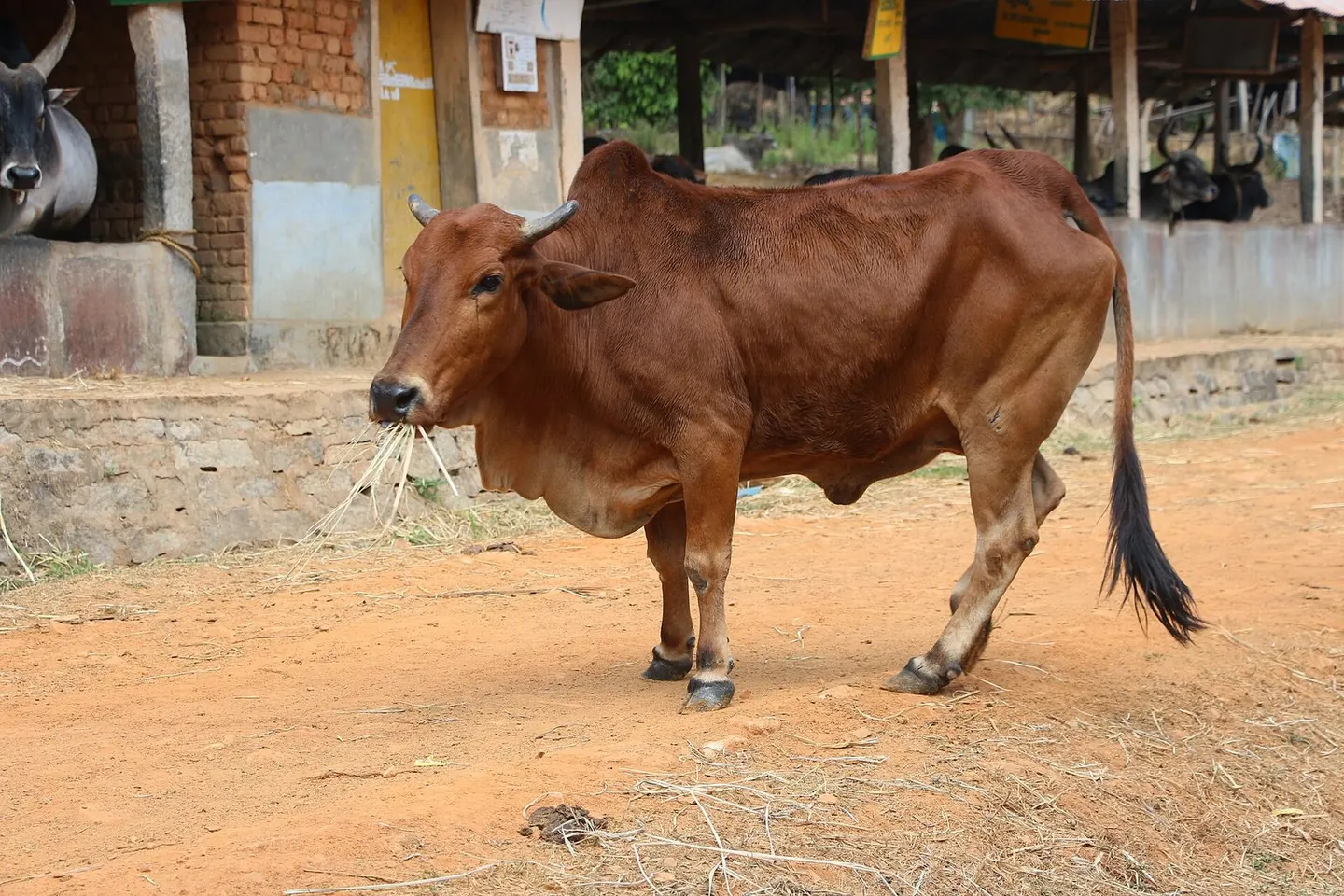
Cattle
Red Sindhi
a red milk breed from Pakistan, kept in India on organised farms, including some in Tamil Nadu and Kerala.
Bull 450 kg · Cow 320 kg
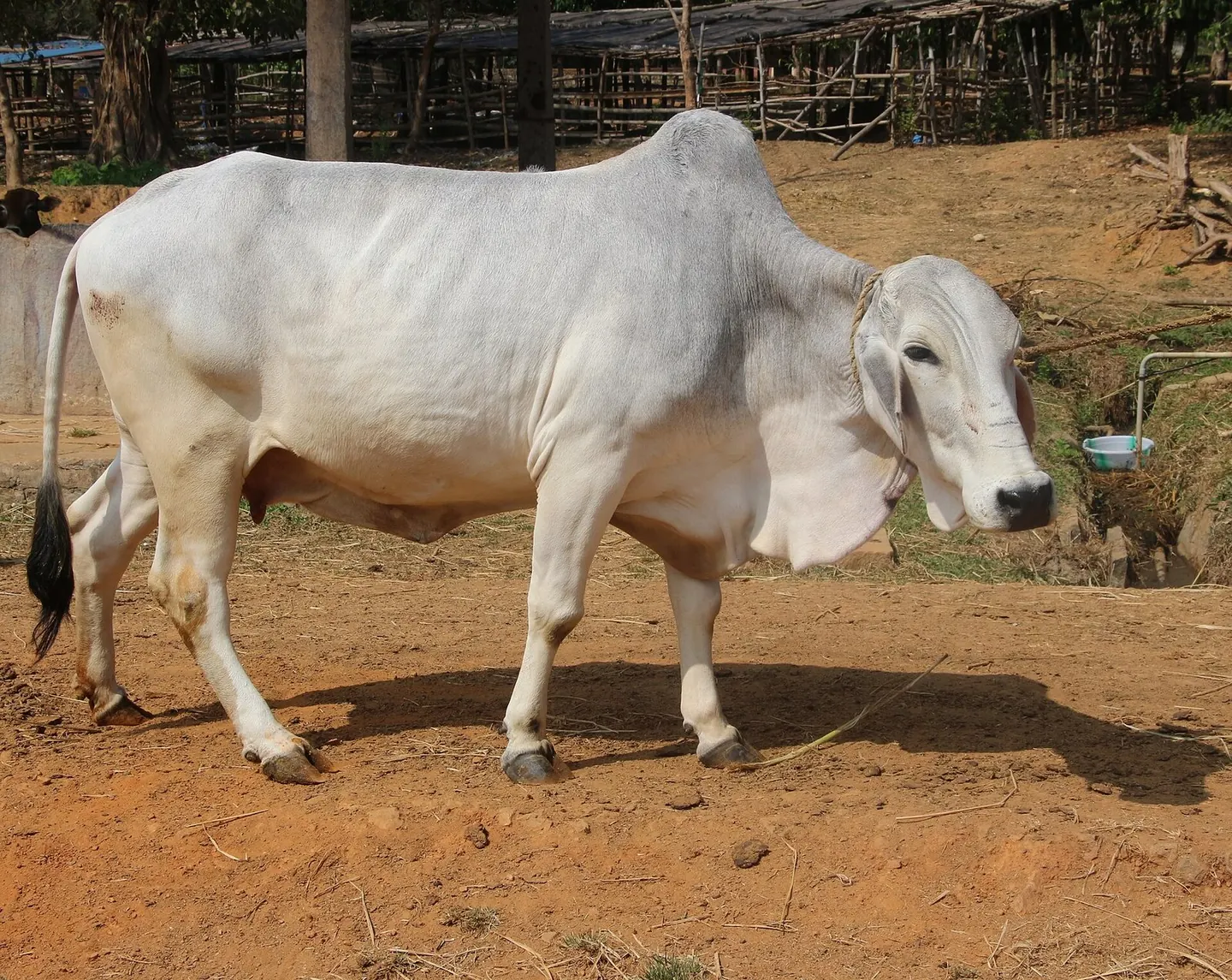
Cattle
Tharparkar
a white or light-grey breed kept for milk and farm work, from the Thar desert of western Rajasthan and Kutch in Gujarat.
Bull 475 kg · Cow 295 kg
Exotic breeds and crosses
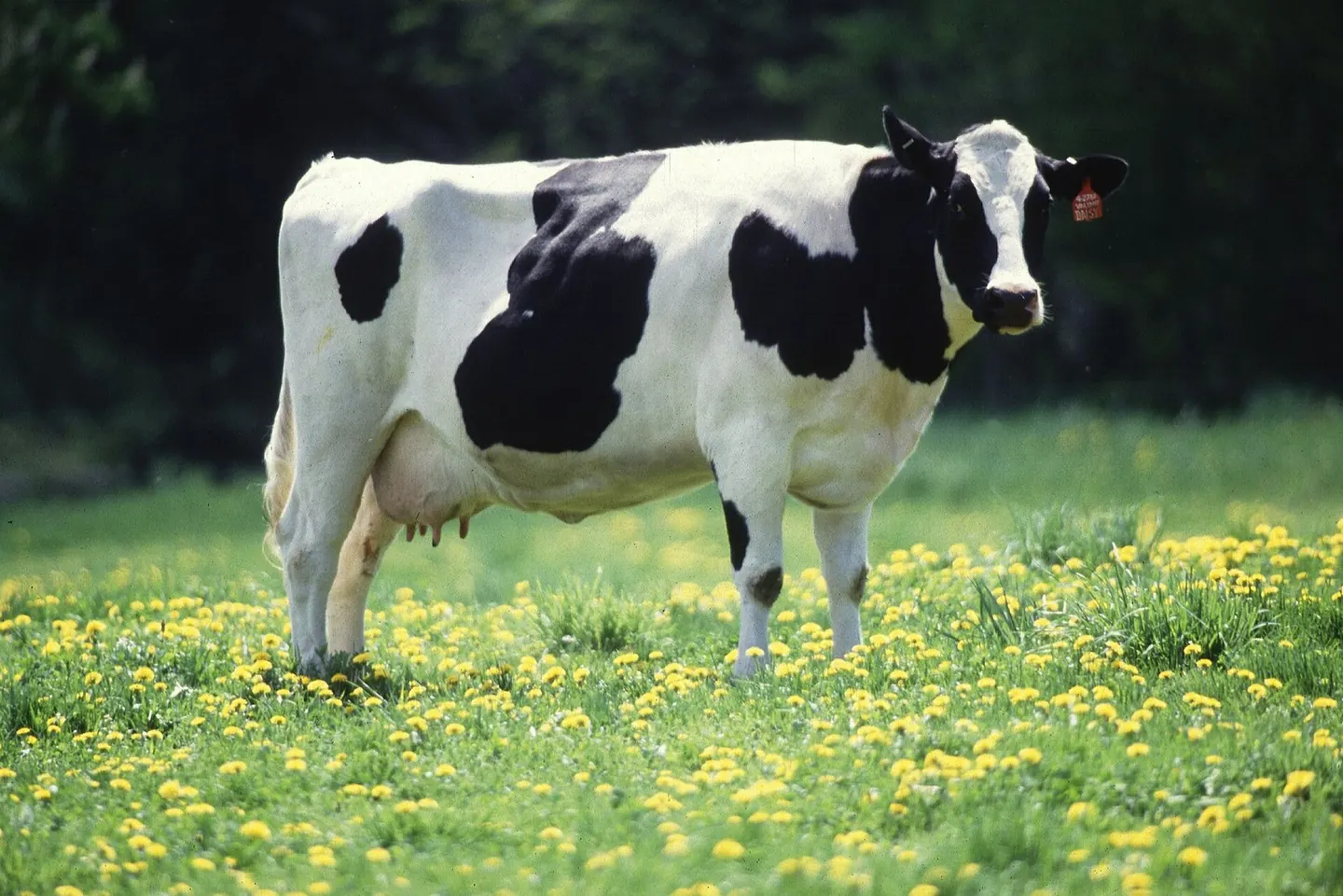
Cattle
Holstein Friesian (HF)
the largest dairy breed, black and white, from Friesland in the Netherlands (TNAU); its crosses give more milk than Jersey crosses but suit cooler, hilly areas (TNAU).
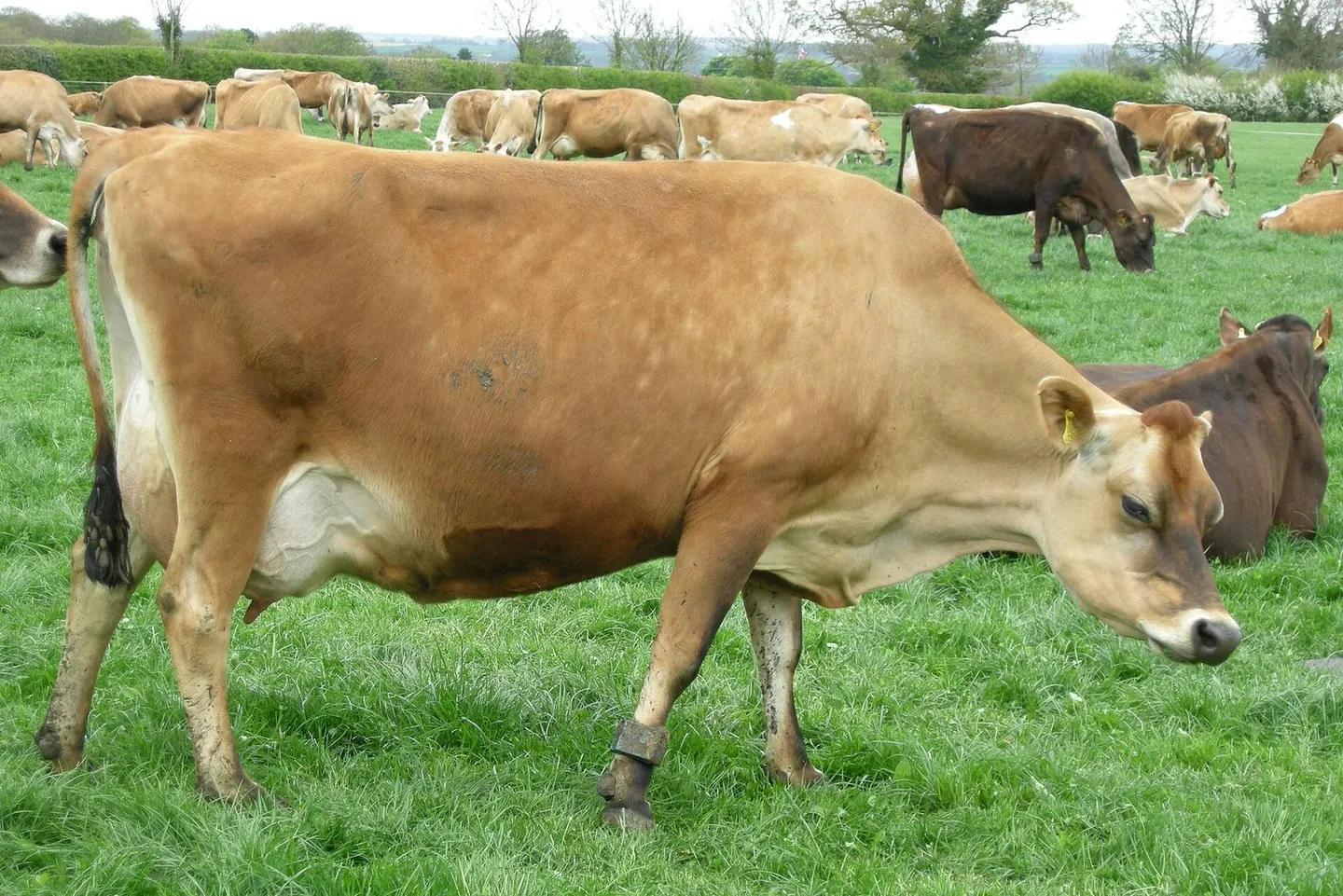
Crossbred cows come from local cows bred to Jersey or Holstein Friesian sires (TNAU).
Buying a cow or bull
See the animal yourself, in daylight, before you pay. Count the large permanent front teeth in the lower jaw to judge its age; younger animals have small milk teeth there (TNAU):
| Large front teeth | Age, about |
|---|---|
| 2 | 2 years |
| 4 | 2.5–3 years |
| 6 | 3–3.5 years |
| 8 | 4 years or more |
- Watch her milked. See three complete milkings in a row if you can, done fully by hand, and measure the milk yourself; a good cow lets a stranger milk her and stands quietly. Buy in her first or second lactation, about a month after calving (TNAU).
- Pregnant? Ask a vet to check. A vet can confirm pregnancy 60–90 days after mating or insemination (TNAU). Ask for the insemination date; the seller's word is not proof.
- Brucellosis test. TNAU advises buying a cow only after a blood test for brucellosis, a disease that causes abortions (TNAU).
- Ear tag and receipt. Cattle are being registered on the government's Bharat Pashudhan portal with a 12-digit ear tag that also records FMD and brucellosis vaccinations (PIB). Write the tag number on your receipt with the date, the seller's name and village and the price; insurance claims depend on the tag (livestock insurance).
- Moving cattle. Each load needs a qualified veterinary surgeon's certificate, written within 12 hours before the journey, that the cattle are fit to travel, free of infectious disease and vaccinated; without it, the carrier must refuse them. A goods vehicle may carry at most 6 cattle, with about 2 square metres each, a non-slip floor, one attendant, feed and water, and no other goods (AWBI). Some states add their own rules, so ask your veterinary hospital before crossing a state border.
- Pay safely. Never pay an advance for an animal you have not seen: see paying safely.
Keep cattle healthy
Vaccinate on the official schedule; your vet or veterinary hospital gives the dates for your area (NDDB). FMD and brucellosis vaccines are given under the government's National Animal Disease Control Programme (PIB).
| Disease | First dose | After that |
|---|---|---|
| Foot-and-mouth disease (FMD) | From 4 months; a booster 1 month later | Every 6 months |
| Brucellosis | Female calves at 4–8 months | None: once in a lifetime |
| Haemorrhagic septicaemia (HS) | From 6 months | Every year, where it occurs |
| Black quarter (BQ) | From 6 months | Every year, where it occurs |
- Crossbreds and local risks. Crossbred and exotic cattle also need a theileriosis vaccine (a tick-borne disease) from 3 months; native cattle do not (NDDB). Ask your vet whether a yearly theileriosis booster is needed, and about lumpy skin disease in your area.
- Clean milking. Wash and dry the udder, milk with clean, dry hands using the full hand rather than two fingers, and milk the udder out fully; this helps prevent udder infection (mastitis) (TNAU).
- No injections to let down milk. Do not give any injection to let down milk without a vet.
- Warning signs. Call the vet at once for high fever, loss of appetite, a swollen throat, a hot swollen leg with limping, mouth blisters with drooling, sores between the hooves, or an abortion (TNAU).
- Worms, ticks and help. Ask your vet for a deworming and tick-control plan. Dial 1962 to reach the mobile veterinary unit for your area (PIB).
Frequently asked questions
Which gives more milk, a native cow or a crossbred?
A well-fed crossbred, usually: a first cross with Jersey can give 2–3 times the milk of its local mother (TNAU). Native dairy breeds such as Gir and Sahiwal give far more than Tamil Nadu's draught breeds. Crossbreds need more feed and care: see native cattle or crossbreds.
How can I tell a cow's age without papers?
By the large front teeth in the lower jaw: 2 at about 2 years and the full 8 at about 4 years (TNAU). After that, only wear gives a rough idea.
Are bulls and bullocks the same?
No. A bull (kaalai) is kept for breeding; a bullock (eruthu) is a castrated male kept for work. On Kattutharai, both are listed under Bull.
Next
Open the page of a breed from your own state, or read about buffaloes. To see what farmers near you are selling, browse cows for sale and bulls for sale.

Find cows and bulls near you on Kattutharai
See cows, calves and bulls for sale direct from farmers near your village, with photos, the village name and the distance. No middlemen. Call or chat with the farmer, then see the animal milked by hand and check it yourself before you pay.
Looking for a particular breed? Search its name in the Kattutharai app, for example Kangayam, Hallikar or Gir.

