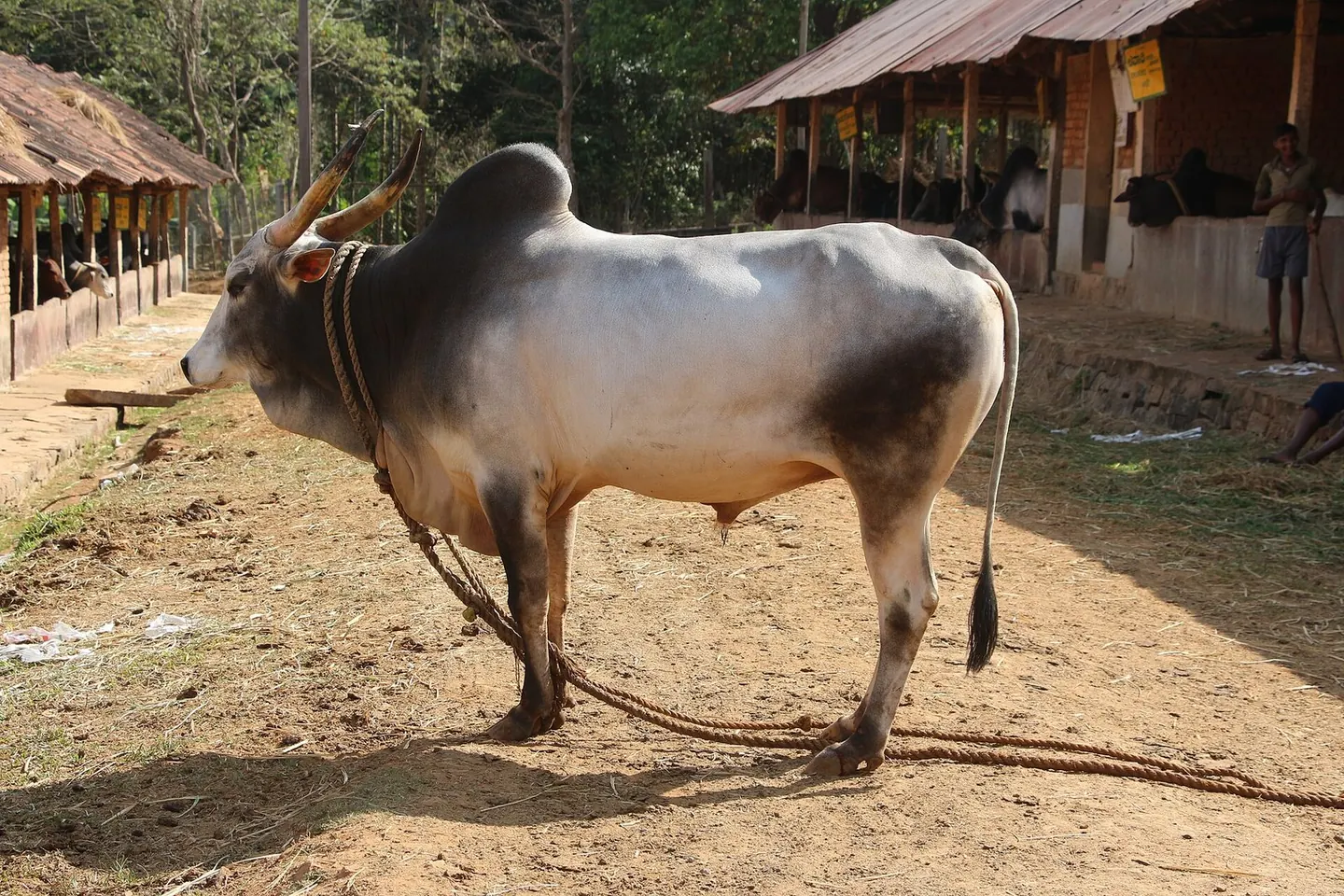
Krishna Valley is a big, heavy draught breed from the black-cotton soils along the Krishna river in north Karnataka. It is a registered cattle breed of Karnataka (ICAR-NBAGR), but it has become rare: about 6.5 lakh animals were reported in 1946 (BAIF study), and only about 3,500 pure ones in the 2013 breed survey (NBAGR study).
How to recognise it
- Colour: grey-white. Bulls are darker on the forequarters and hindquarters, and adult cows look whiter; brown-and-white, black-and-white and mottled animals are also seen (NBAGR database). Breeders look for a black muzzle, eyes, hooves and tail switch (BAIF study). TANUVAS scientists add a black scrotum and black patches over the knees and fetlocks (TANUVAS study).
- Head and horns: a distinct bulge on the forehead. The horns are small: they come out sideways from the outer corners of the head and curve slightly up and in (NBAGR database).
- Body: large and massive, with a deep, loosely built body, a well-developed hanging dewlap, small pointed ears and a tail that almost touches the ground. Breeders prefer ears that do not droop too much (NBAGR study).
- Size and weight: males stand about 145 cm at the shoulder and females about 122 cm. NBAGR's record gives average weights of about 550 kg for males and about 325 kg for females (NBAGR database).
What it is good for
- Heavy farm work. NBAGR describes a heavy draught breed for the black-cotton soils of the Krishna basin; young males start work at about 2.5 years (NBAGR database). TNAU notes powerful bullocks, suited to slow ploughing (TNAU).
- Milk. TNAU describes the cows as fair milkers, giving about 900 kg in a lactation (TNAU). In a 2017–18 ICAR survey in Raichur district, farmers reported about 3 litres a day per cow (ICAR survey). In a 2008 survey of owners, nearly all kept their animal for milk for the home, dung for the fields, and sale when money was needed (BAIF study).
- Calves. One at a time. NBAGR's record puts the first calving at about 46–49 months (NBAGR database); in the ICAR survey, Krishna Valley cows calved for the first time later than any of the other native breeds studied, at about 4 years (ICAR survey).
Where it is mainly found
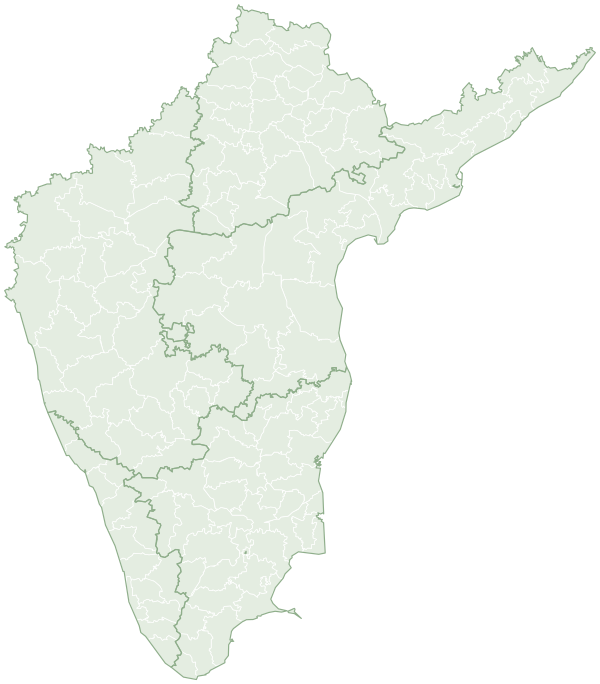
NBAGR's breed record names Belagavi, Vijayapura and Raichur districts in Karnataka, and Solapur, Sangli and Satara across the border in Maharashtra (NBAGR database). The breed grew up on the black-cotton soils of the Krishna and its tributaries, the Ghataprabha and the Malaprabha (BAIF study). NBAGR scientists now place it in Belagavi, Vijayapura, Bagalkote and Raichur districts, and report it extinct in Maharashtra (NBAGR study).
A 2008 survey of 116 villages in Bagalkote and Vijayapura districts found only 546 Krishna Valley animals, and most owners kept just one (BAIF study). The 2013 breed survey counted about 11,000 graded, part-Krishna Valley animals besides the pure ones (NBAGR study), and TANUVAS scientists put true-to-type animals at fewer than 100, in a few villages of Jamkhandi taluk (TANUVAS study). The Karnataka Animal Husbandry Department keeps a Krishna Valley herd at its farm at Tegur, Dharwad district (Karnataka AH department).

Looking for Krishna Valley cattle?
Search “Krishna Valley” in the Kattutharai app to find Krishna Valley cows and bulls for sale near you, or see all cows for sale. The seller names the breed and Kattutharai does not check it, so look at the animal yourself before you pay.


Rearing tips
- Fodder and grazing. NBAGR describes animals stall-fed through the year and let out to graze after the grass is cut for hay. They get green jowar, maize, beans and grasses, and milking cows and bullocks also get concentrate feed. Leaves of fodder trees grown along the river banks, which stay green in summer, help in the dry months (NBAGR database). For feed amounts, see how cattle are kept.
- Shelter. In the 2008 survey, nearly two in three owners gave their cattle no shed at all (BAIF study). A simple roof and a dry floor protect a big animal from rain and summer heat.
- Health. Owners in the tract vaccinate against FMD (foot-and-mouth disease), black quarter and haemorrhagic septicaemia (BAIF study). Follow the official schedule and ask your vet about worms and ticks: see keep cattle healthy.
Buying tips
- Check the signs: a grey-white body, darker on a bull; a black muzzle, eyes, hooves and tail switch; a bulging forehead with small horns; a big, deep body with a hanging dewlap; a tail that nearly reaches the ground.
- Do not mix it up with Khillari. Khillari, from the same districts, has long horns that curve back and up like a bow, tight skin and a thin, short dewlap (NBAGR study). See Khillari cattle: breed, weight and where it is found.
- Most animals are crosses. In the 2008 survey, only 23 of 1,026 animals scored full marks for the breed's signs (BAIF study). The breed name in an ad is the seller's word, and Kattutharai does not check it. See the mother and the herd, and check the signs yourself.
- Age, health and papers: count the teeth, see a cow milked by hand, ask a vet to check pregnancy, and get the ear tag number on your receipt: see buying a cow or bull.
Frequently asked questions
Are Krishna Valley cattle endangered?
Yes. Scientists describe the breed as endangered: about 3,500 pure animals in 2013, and fewer than 100 true-to-type animals by a TANUVAS estimate (NBAGR study, TANUVAS study).
Why did the breed decline?
Breeding bulls became scarce as farmers preferred Khillari cattle and moved to tractors (TANUVAS study). In the 2008 survey there was only 1 breeding-age male for every 32 females (BAIF study).
Is Krishna Valley a milk breed?
No, it is a draught breed, though its cows are fair milkers: about 3 litres a day by farmers' estimates and about 900 kg in a lactation by TNAU's figure. If you want milk to sell, see native cattle or crossbreds.
Next
Compare Krishna Valley with Khillari, which replaced it in many villages, and with Ongole and Gir, which NBAGR names among its ancestors. Read Cows and bulls: native breeds, crossbreds, buying and care for buying and care, and browse cows for sale and bulls for sale.