Pulikulam is a small, hardy draught breed of south Tamil Nadu, kept in big herds that move across Madurai, Sivaganga and Virudhunagar districts (NBAGR database). Herders earn mainly from the manure their herds leave on farmers' fields and from selling male calves (TANUVAS study). The breed is named after Pulikulam village in Sivaganga district (NBAGR study) and is one of Tamil Nadu's four registered cattle breeds (ICAR-NBAGR).
How to recognise it
- Colour: bulls are dark grey, often almost black; cows are white or grey. Calves are mostly grey (ICAR-NBAGR, NBAGR study).
- Black points: the muzzle, eyelids, tail switch and hooves are black (ICAR-NBAGR).
- Horns: they curve outwards, upwards, backwards and then inwards to sharp tips that stay wide apart; they are about 34 cm long in males and 37 cm in cows (ICAR-NBAGR).
- Body: small and compact on short legs, like a smaller Kangayam, with a broad forehead grooved in the middle, a large hump in males and a small one in cows, short ears held level and a small udder (ICAR-NBAGR, NBAGR study).
- Size and weight: males stand about 117 cm at the shoulder and females about 112 cm; adult males weigh about 259 kg and females about 208 kg on average (ICAR-NBAGR).
What it is good for
- Manure. The herds spend the night on farmers' fields, from about 6 in the evening to 9 the next morning, and the farmer pays the herders for each night. This penning work is available on about 200 days a year; when there is none, the dung is collected, dried and sold (NBAGR study).
- Farm work. The bullocks are active and suited to field work and pulling carts (NBAGR study).
- Young stock. Male calves are sold at 6–12 months, while female calves stay in the herd (NBAGR study). Selling manure and male calves is the herders' main income (TANUVAS study).
- Little milk. Only 10–15 cows in a herd are milked, for the herders' own needs, giving 0.5–2 litres a day (ICAR-NBAGR).
- Calves. One at a time. Cows first calve at 4–4.5 years and then every 1.5–2 years, with 8–10 calves in a life of about 20 years (NBAGR study).
Where it is mainly found
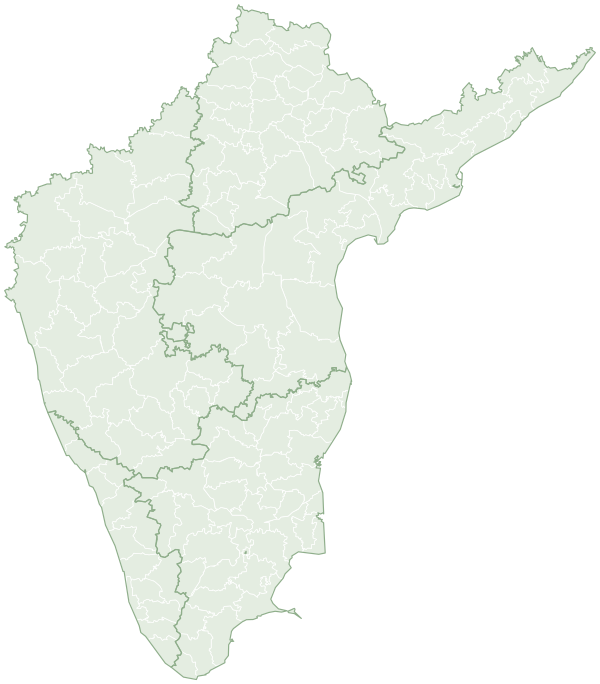
NBAGR names Madurai, Sivaganga and Virudhunagar districts as the breeding tract (ICAR-NBAGR). The herds migrate: in an NBAGR survey they set out in about June and came back by January, along routes of about 200 km through these three districts (NBAGR study). A herd has 100–700 cattle, about 400 on average, and small herds are often pooled (ICAR-NBAGR). TANUVAS keeps a Pulikulam herd at its Pulikulam Cattle Research Station at Manamadurai in Sivaganga district (TANUVAS).

Looking for Pulikulam cattle?
See cow ads in the districts where Pulikulam cattle come from, or search “Pulikulam” in the Kattutharai app to find them near you. The seller names the breed and Kattutharai does not check it, so look at the animal yourself before you pay.
Cow ads in its home districts, 1 Nov 2026:


Rearing tips
- Grazing herds. Pulikulam cattle live on grazing — in forests, on common land and on harvested fields — from about 9 in the morning to 6 in the evening, walking 5–6 km, and stay in the open all year (NBAGR study). In a TANUVAS survey, 70% of herders migrated for grazing (TANUVAS study).
- Less grazing land. Limits on forest grazing, shrinking grazing land and a lack of drinking water are the herders' biggest problems (NBAGR study).
- Better feeding. The herds get no concentrate feed or mineral mixture, and TANUVAS researchers suggest balanced feeding with mineral mixture to improve the cattle (TANUVAS study). If you keep a few at home, give green and dry fodder, clean water and mineral mixture: see how cattle are kept.
- Calves. Calves up to 3 months old stay back from grazing and live on their mother's milk (NBAGR study).
- Vaccinate. In the NBAGR survey, the herds were not vaccinated regularly, although black quarter, foot-and-mouth disease and haemorrhagic septicaemia occur in the area (NBAGR study). Follow the schedule in keep cattle healthy.
Buying tips
- Check the signs: a small, compact animal on short legs; a dark grey bull or a white or grey cow; black muzzle, eyelids, tail switch and hooves; horns curving in to sharp, wide-apart tips.
- Handle with care. Pulikulam cattle grow up in big herds and are known for a fiery temper (NBAGR study). Move a new animal calmly and give it time to settle.
- Crosses are common. The breed name in an ad is the seller's word, and Kattutharai does not check it. An animal from a known herd in the home districts, seen with its herd, is the safest buy.
- Male calves from TANUVAS. The Pulikulam Cattle Research Station at Manamadurai sells male calves (TANUVAS).
- Age, health and papers: see buying a cow or bull.
Frequently asked questions
How are Pulikulam herds kept?
In big herds that graze by day, move with the seasons and spend the nights penned on farmers' fields; the farmers pay the herders for the manure (NBAGR study).
What other names does Pulikulam have?
NBAGR's other names include Mani madu (ICAR-NBAGR), and TNAU also gives Kidai madu (TNAU).
How much milk does a Pulikulam cow give?
Very little: 0.5–2 litres a day, and only a few cows in each herd are milked (ICAR-NBAGR).
Next
Compare Pulikulam with Tamil Nadu's other native breeds, Kangayam, Umblachery and Bargur. Read Cows and bulls: native breeds, crossbreds, buying and care for buying and care, and browse cows for sale and bulls for sale.