Bidri is a medium-sized black goat from Bidar and Kalaburagi districts in north Karnataka, kept for meat. It is one of Karnataka's two goat breeds registered with ICAR-NBAGR, lives mainly on grazing and often has twins after its first kidding (NBAGR register, NBAGR breed record).
How to recognise a Bidri goat
- Colour: black. Some goats have white spots on the ears, forehead, neck or knees; the muzzle, eyelids and hooves are black (NBAGR breed record). In a survey of 20 flocks in Bidar district, about 73% of goats were fully black, 18% black with white patches and 9% black with brown (KVAFSU study).
- Head and ears: a straight forehead and long ears that hang down.
- Horns: most goats have horns that curve backwards and outwards; about 9% in the survey had none (KVAFSU study).
- Size: medium, about 75–79 cm tall at the shoulder. In two surveys, adults averaged about 33–37 kg (bucks) and 30–32 kg (does) (NBAGR breed record, KVAFSU study).
- Udder: small and hairy — the breed is not milked.
What Bidri goats are kept for
- Meat. Bidri is reared for meat only; farmers in its home area do not milk it (NBAGR breed record). Many male kids are sold at about 6 months (KVAFSU study).
- Many kids. A doe's first kidding is usually a single kid; after that, twins are common. NBAGR records about 1.7 kids per kidding on average, and in the KVAFSU survey 40% of does had twins and 5% triplets (NBAGR breed record, KVAFSU study).
- Early, regular breeding. Does first kid at about 16–18 months and then about every 8–9 months (NBAGR breed record, KVAFSU study). NBAGR's survey found 6 to 11 kiddings in a doe's lifetime (NBAGR study).
- Hardiness. NBAGR describes Bidri as well adapted to its region and kept mainly on grazing (NBAGR breed record).
Where Bidri goats come from
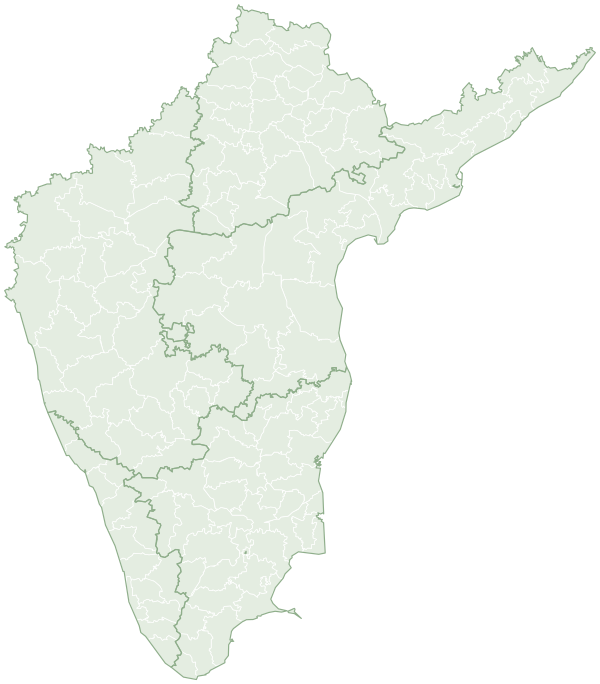
Bidri is named after Bidar. Its home tract is Bidar district and neighbouring parts of Kalaburagi (Gulbarga) district, on the Bidar plateau, where Karnataka meets Telangana's Nizamabad and Medak districts and Maharashtra's Latur, Osmanabad and Nanded districts (NBAGR study, KVAFSU study). The area is semi-arid, with very hot summers and about 827 mm of rain a year. The goats were first kept in the hills and forests of Bidar and Kalaburagi and later spread to villages across the area (NBAGR study). NBAGR estimated about 1,10,000 Bidri goats in 2016 (NBAGR breed record).

Looking for Bidri goats?
Search “Bidri” in the Kattutharai app to find Bidri goats for sale near you, or see all goats for sale. The seller names the breed and Kattutharai does not check it, so look at the animal yourself before you pay.


Rearing Bidri goats
- A grazing breed. In the home tract, flocks graze from about 10 am to 6 pm, walking 5–6 km over fallow land, pasture and forest, and spend the night in simple open sheds (KVAFSU study). Bucks and does in milk sometimes get some grain or concentrate.
- Climate. Bidri is used to a hot, dry plateau. The studies describe it only in its home tract, so little is known about how it does in humid coastal districts. ICAR-CIRG advises improving local goats with good bucks of a breed suited to your agro-climatic zone, rather than bringing in a breed from another region (ICAR-CIRG).
- Stall feeding. The surveys describe Bidri on grazing, not in stall-fed units. If you have little grazing, plan a few hours of grazing plus cut fodder — see feeding systems.
- Health. Farmers in the KVAFSU survey dewormed their goats about every 3 months with help from the state veterinary department, and knew about vaccination against PPR and enterotoxaemia (KVAFSU study). Plan yours with the vaccination calendar.
Buying a Bidri goat
- Check the breed signs: a black coat (any white only as spots on the ears, forehead, neck or knees), black muzzle, eyelids and hooves, a straight forehead, long hanging ears and a medium build.
- Ask where the goat comes from. Osmanabadi goats from just across the Maharashtra border are also mostly black. NBAGR found Bidri genetically distinct from neighbouring goats (NBAGR study), but you cannot see that by eye, so a goat from a known flock in Bidar or Kalaburagi is the safer buy.
- Expect crosses. Where goats of different breeds graze together, uncontrolled mating mixes the breeds (ICAR-CIRG), and a cross can be sold under a breed name.
- The breed in an ad is the seller's word. Kattutharai does not check it. See the goat yourself, and its mother if you can.
- For breeding stock, choose animals that look true to the breed, from a flock not related to yours (ICAR-CIRG).
Then use How to buy goats safely: health, age and fraud checks to check health and age, and to pay safely.
Frequently asked questions
Is Bidri a registered breed?
Yes. ICAR-NBAGR, which keeps India's breed register, lists Bidri as a registered goat breed of Karnataka, along with Nandidurga (NBAGR register).
Is Bidri a milk goat?
No. It is kept for meat only. Farmers in its home area do not milk it, and the does have a small udder (NBAGR breed record).
Does a Bidri doe have twins?
Often, but usually not at her first kidding. The average is about 1.7 kids per kidding (NBAGR breed record).
Can I rear Bidri goats in Tamil Nadu or Kerala?
You can, but the breed is known only from its dry home area in north Karnataka, and there is little information on how it does in hot, humid districts. Compare it with breeds from near you in How to choose a goat breed: South Indian breeds compared.
Next
Compare Bidri with other South Indian breeds in How to choose a goat breed: South Indian breeds compared, or read about its neighbour Osmanabadi and Tamil Nadu's black goat, Salem Black. When you are ready, browse goats for sale and use How to buy goats safely: health, age and fraud checks as your checklist.