The Tellichery chicken (also written Tellicherry) is Kerala's registered native chicken breed: a small black bird with a blue sheen, kept mainly for meat in backyard flocks of north Kerala. ICAR-NBAGR registers it as a chicken breed of Kerala (ICAR-NBAGR). It takes its name from the town of Tellicherry, now Thalassery, in Kannur district, the same town that gives its name to the Tellicherry goat, a different animal (NBAGR breed record).
How to recognise it
- Colour: black all over, with a shining bluish sheen on the neck hackles, back and tail. A few birds have some golden feathers mixed into the neck (NBAGR breed record).
- Skin and legs: grey skin and blackish-grey shanks (NBAGR breed record).
- Comb: a large, red single comb that stands upright in cocks and falls to the back in hens. The ear lobes are red, and some birds have white marks on them (NBAGR breed record, Kerala Biodiversity Board).
- Size: a light bird. NBAGR's average adult weights are 1.62 kg for cocks and 1.24 kg for hens (NBAGR breed record).
What it is good for
- Meat. NBAGR records the breed as kept mainly for meat (NBAGR breed record).
- A few eggs. In village flocks a hen lays her first egg at about 6 months and about 72 eggs a year (60–80), in runs of 4–6 days. The eggs weigh about 40 g and have light brown, brown or creamy shells (NBAGR breed record). These figures describe birds in farmers' flocks; no government farm figure was found.
- Hens that hatch their own chicks. Hens usually go broody and sit on their eggs, and 70–80% of the eggs hatch (NBAGR breed record).
- Hardy birds. Losses are very low, almost nil, in its home flocks (NBAGR breed record, Kerala Biodiversity Board).
Where it is mainly found
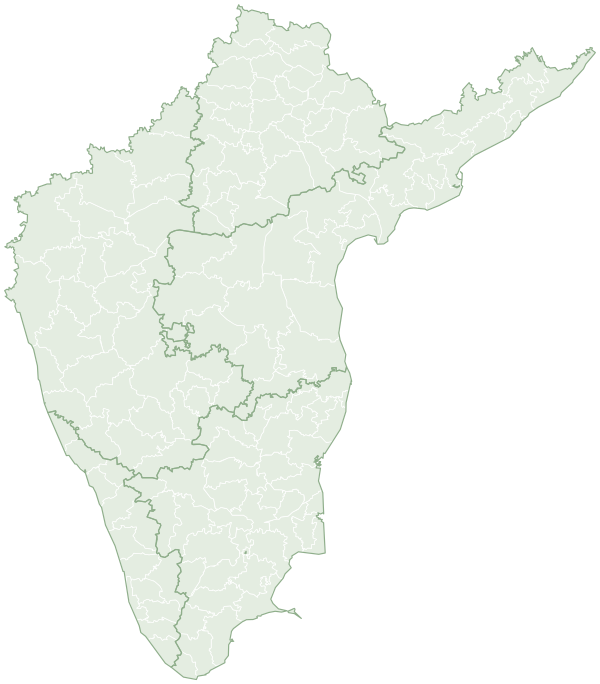
NBAGR's record names Kozhikode, Kannur and Malappuram districts of Kerala, and Mahe, the small part of Puducherry on the north Kerala coast (NBAGR breed record). Kerala's Biodiversity Board says the birds are now found mainly in Kozhikode district, with a few in Kannur, Malappuram and Mahe (Kerala Biodiversity Board). NBAGR credits tribal communities with developing the breed. Flocks are small: about 5 or 6 birds on average, most of them hens (NBAGR breed record).

Looking for Tellichery chickens?
Search “Tellichery” in the Kattutharai app to find Tellichery chickens for sale near you, or see all chickens for sale. The seller names the breed and Kattutharai does not check it, so look at the birds yourself before you pay.


Rearing tips
- Free range by day. In its home area the birds roam freely and find grains, seeds, green plants and insects; farmers usually give no bought poultry feed (Kerala Biodiversity Board). If your yard has little to forage, give some grain and clean water every day.
- A raised night shelter. Farmers shut the birds in at night in wooden coops raised 2–3 feet off the ground (Kerala Biodiversity Board), which keeps them dry and away from many predators.
- Let the hens brood. A Tellichery hen hatches her own chicks. Give a sitting hen a quiet, dry corner with food and water close by.
- Keep the line pure. If you want true Tellichery chicks, keep only Tellichery cocks with your hens.
- Prevent disease. Ask your vet about vaccination against Ranikhet disease and fowl pox. In Kerala, the Animal Husbandry Department makes these vaccines and supplies them free through its veterinary institutions (Kerala AH Department). Keep your flock away from wild birds, keep the coop clean, and report sudden deaths to the nearest veterinary hospital within 24 hours (bird flu action plan). For more on keeping country chickens healthy, see Country chicken in South India: breeds, buying and care.
Buying tips
- Check the signs: solid black feathers with a blue shine, grey skin, blackish-grey legs, and a large red single comb, upright in a cock and falling back in a hen. Brown or speckled feathers, or yellow legs, do not fit the breed's description (NBAGR breed record).
- Other black chickens look alike. Kadaknath, a black breed from Madhya Pradesh, is also sold in Kerala, and crosses are common. The breed name in an ad is the seller's word, and Kattutharai does not check it. See the parent birds if you can, and check the signs yourself.
- Buy chicks from a known farm. KVASU's University Poultry and Duck Farm at Mannuthy keeps Thalassery (Tellichery) chickens and supplies chicks, directly and through the Kerala Animal Husbandry Department's regional poultry farms (KVASU). Ask there, or at your nearest veterinary hospital.
- Healthy birds only. Do not buy birds that are weak, sit still with drooping wings, or have a swollen head, a runny nose, or a comb and wattles that have changed colour; these are warning signs of disease (bird flu action plan). Ask which vaccines the birds have had.
Frequently asked questions
Is the Tellichery chicken the same as the Tellicherry goat?
No. Both are named after the same town in Kannur district, but one is a chicken breed and the other a goat breed: see Tellicherry (Malabari) goat: breed guide and buying tips.
How many eggs does a Tellichery hen lay?
About 72 a year (60–80) in village flocks, each weighing about 40 g. The first egg comes at about 6 months (NBAGR breed record).
How big does a Tellichery chicken grow?
It is a light breed: on average about 1.62 kg for an adult cock and 1.24 kg for a hen (NBAGR breed record).
Is Tellichery good for a beginner?
Yes, for a small backyard flock in Kerala: the birds find much of their own food, hens hatch their own chicks, and losses are low in home flocks. It is not the bird to choose for many eggs or fast growth.
Next
Compare it with other native breeds such as Aseel and Kadaknath, or read Country chicken in South India: breeds, buying and care for buying and care. Browse country chickens for sale, or post a free ad to sell your own birds.