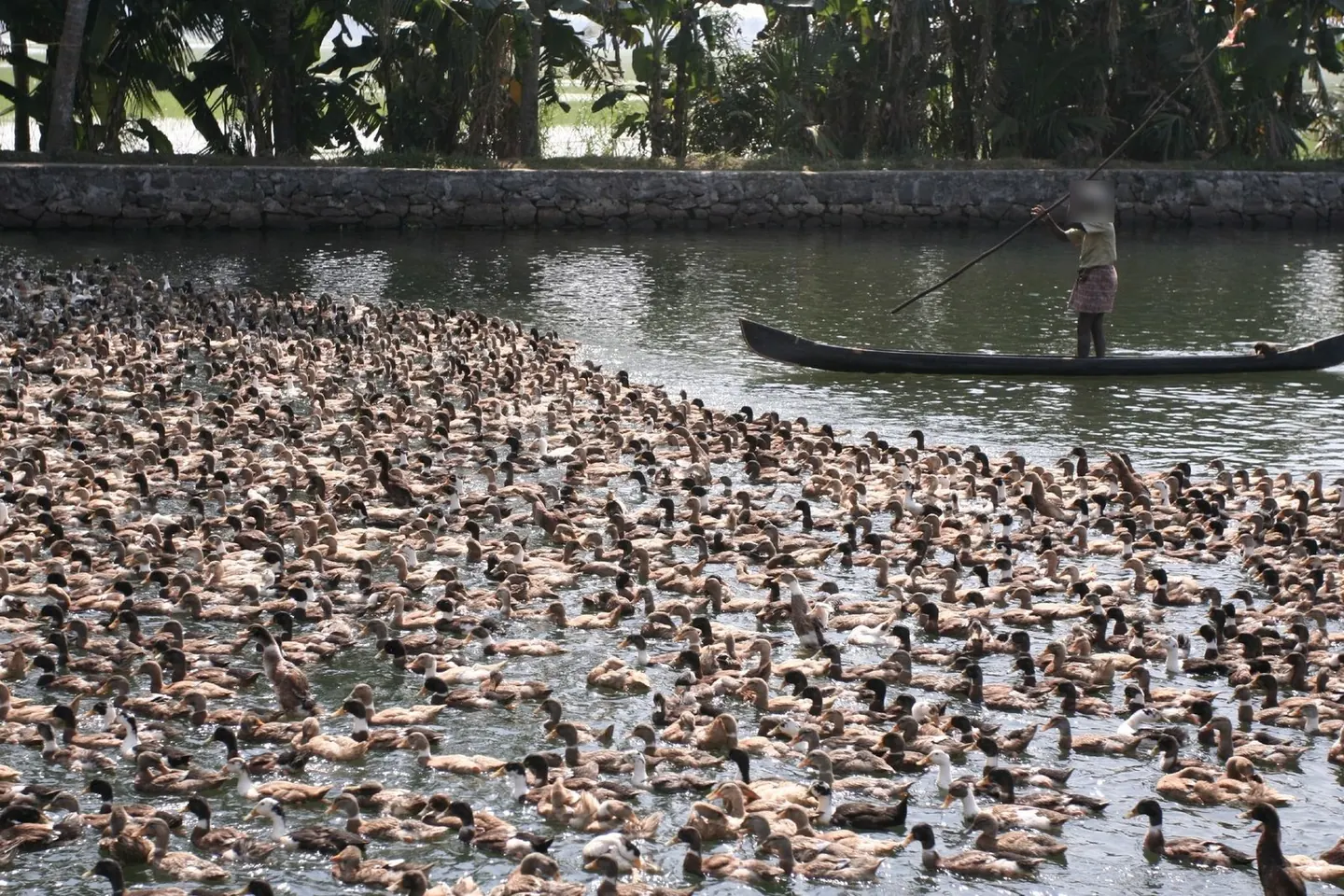
Ducks are India's second poultry after chickens, kept mostly for eggs and also for meat (ICAR-DPR). In Kerala's Kuttanad, Tamil Nadu's paddy districts and the Krishna–Godavari delta of Andhra Pradesh, flocks graze the paddy fields after harvest. This page covers rearing, breeds, buying, health and the bird-flu rules every duck keeper must know.
What ducks are kept for
- Eggs. The main product. Tamil Nadu's local ducks lay about 160–200 eggs a year, averaging about 62 g, mostly between midnight and 6 am (TANUVAS study). Ducks keep laying well in their second year (TNAU).
- Meat. Herded flocks are kept for 2–3 years and then sold for meat (TANUVAS study). White Pekin and Muscovy are kept as meat ducks.
- Ducklings. Many keepers hatch and sell ducklings. In Tamil Nadu, duck eggs are still mostly hatched under broody hens, 15–20 eggs to a hen for 28 days (TANUVAS study).
- Help in the paddy. On harvested fields, ducks eat fallen grain, snails and insects such as grasshoppers and beetles, and their droppings feed the soil (ICAR-DPR review).
Almost all of India's ducks, about 97%, are kept in backyard and village flocks rather than on farms. Kerala produces about 10% of India's duck eggs and Andhra Pradesh about 6% (ICAR-DPR review).
Where ducks are kept
- Tamil Nadu. Flocks gather where there is paddy and water. A TANUVAS survey studied eight high-duck districts: Thiruvallur and Kancheepuram in the north, Karur and Erode in the west, Tiruchirappalli and Thanjavur in the east, and Tirunelveli and Kanyakumari in the south. A 2009 estimate put 70% of the state's ducks in Kancheepuram, Thiruvallur, Villupuram, Cuddalore, Vellore and Tiruvannamalai, as those districts were then (TANUVAS survey).
- Kerala. Kuttanad, in Alappuzha, Kottayam and Pathanamthitta districts, is the home of the Kuttanad duck (ICAR). There, flocks are let onto the paddy fields after harvest, and many keepers travel with their ducks (Kerala Biodiversity Board).
- Andhra Pradesh. An NBAGR survey found ducks raised alongside paddy in Krishna and West Godavari districts, looking much like Kerala's ducks (NBAGR study). Flocks there move from field to field, start laying at about 180 days and lay 120–150 eggs a year (ICAR-DPR).
How ducks are raised in South India
ICAR-DPR describes three systems (ICAR-DPR review):
- Extensive: only a night shelter; the ducks find all their food outside.
- Semi-intensive: a house at night, some home-made feed, and foraging by day. Most farmers keep ducks this way.
- Intensive: a closed house with deep litter of paddy husk or chopped straw, and feed and water inside, with or without water channels.
Most of Tamil Nadu's duck keepers in the TANUVAS survey were landless and moved their flocks from place to place (TANUVAS survey). An earlier TANUVAS study describes how these herded flocks are kept (TANUVAS study):
- Flock size. Flocks are counted in dozens: usually 12 dozen ducks, anywhere from 5 to 25 dozen, with one drake for every 12 ducks.
- Feeding. By day the ducks graze harvested paddy fields, ponds, lakes and channels for fallen grain, snails and small fish. About 4–5 acres of harvested paddy a day feed 1,000 ducks; keepers book fields in advance and pay the landowner.
- Night pen. A movable pen of bamboo or plastic net on a raised platform.
- Moving. Flocks travel for 3–4 months at a time: from the northern districts to Puducherry, from central Tamil Nadu to the Thanjavur delta and from the south to Kanyakumari, and sometimes into Kerala, Karnataka and Andhra Pradesh.
- Ducklings. They get rice flour and then broken rice, go into water from the third day, and start grazing with the flock at about 35 days.
Duck breeds
Only one duck breed from the southern states is on India's breed register: the Kuttanad duck of Kerala (ICAR-NBAGR). Three breeds from abroad are also widely kept:
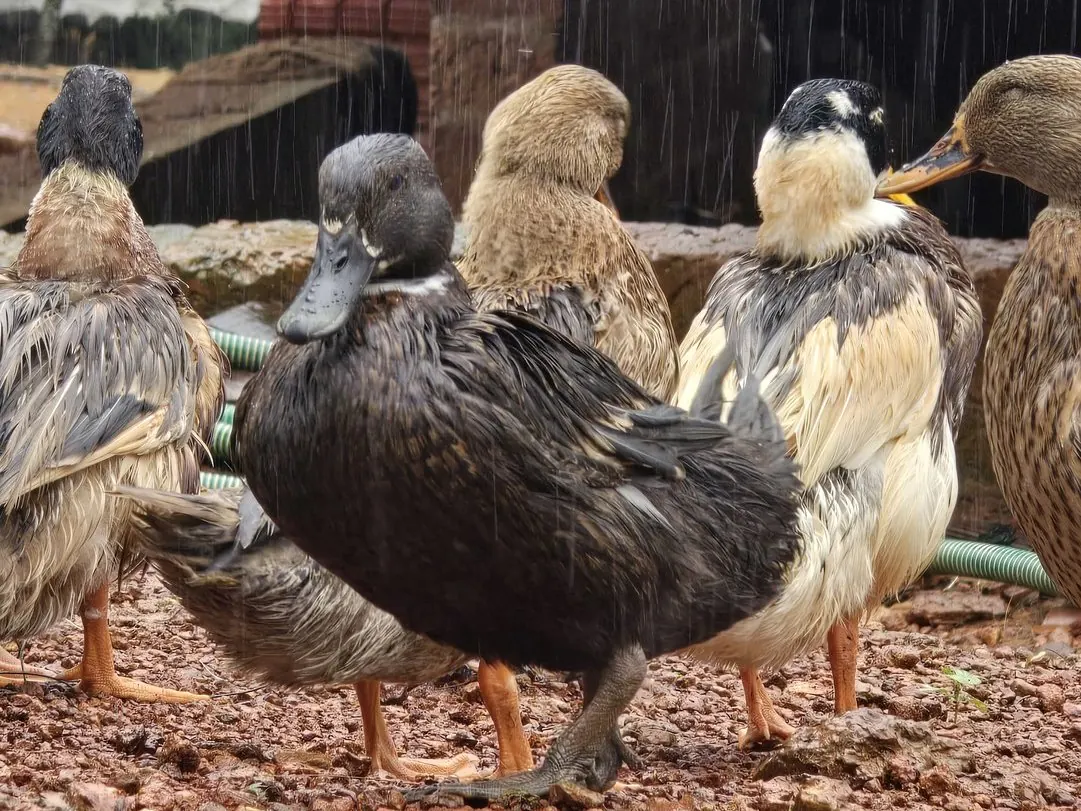
Duck
Kuttanad
Kerala's registered duck from the Kuttanad backwaters, with Chara and Chemballi colour types, kept for eggs and meat.
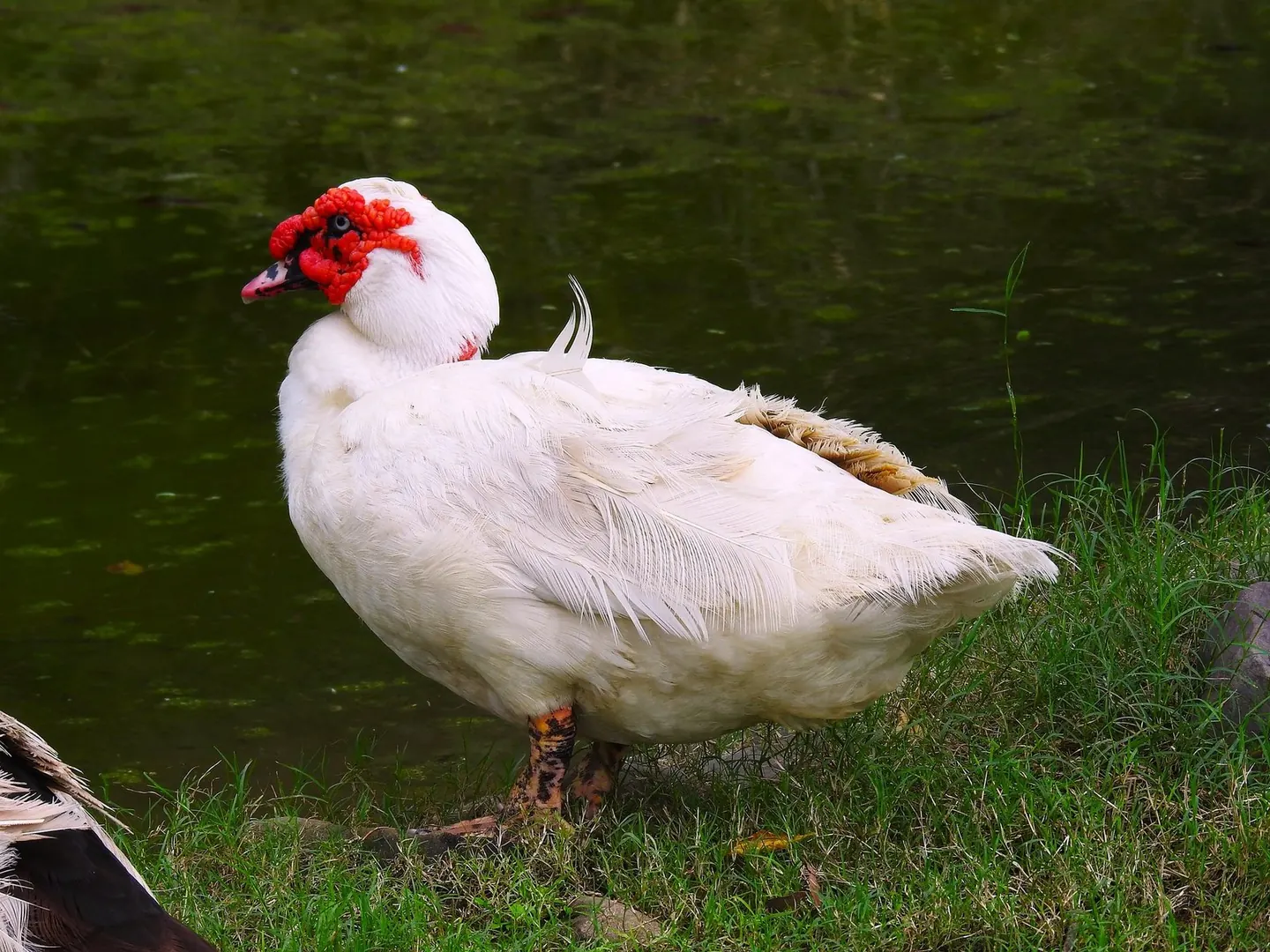
Duck
Muscovy (Manila)
the "Manila" duck: a separate species from South America, kept for lean meat.
Drake 4.5–6.4 kg · Duck 2.2–3.1 kg
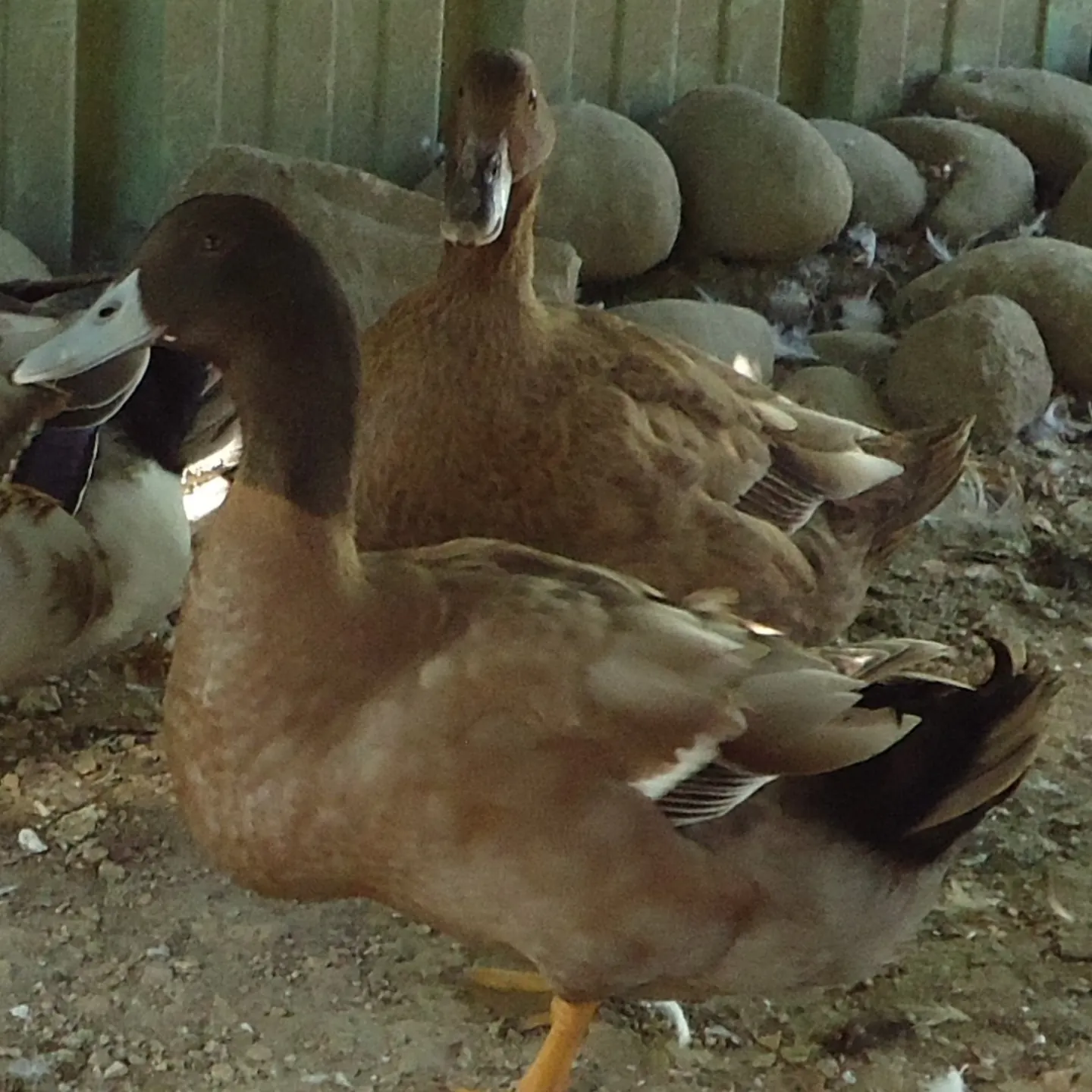
Duck
Khaki Campbell
an egg breed from the United Kingdom, brought in by government duck farms.
Drake 2.2–2.4 kg · Duck 2–2.2 kg
Indian Runner
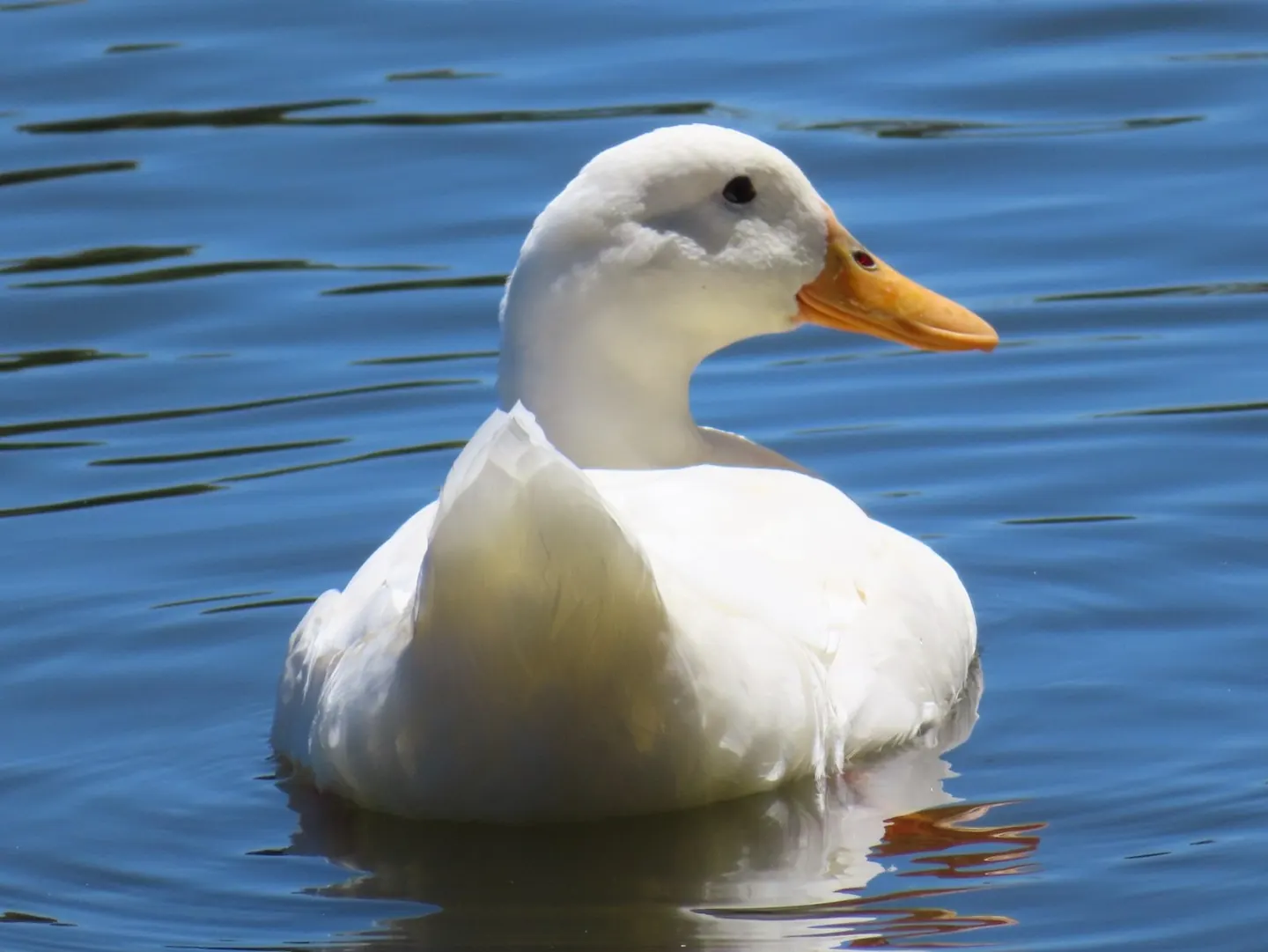
The Indian Runner is an egg duck that stands upright like a penguin and runs instead of waddling. Despite its name, ICAR-DPR gives its origin as Indonesia and Malaysia. It comes in fawn-and-white, white and pencilled varieties. Drakes weigh about 1.6–2.2 kg and ducks 1.4–2 kg, and handbooks credit it with about 200–300 white eggs a year (ICAR-DPR review).
Tamil Nadu's local ducks
Most of Tamil Nadu's ducks are local ducks of many colours and shapes, and none is a registered breed (TANUVAS study, ICAR-NBAGR).
- Kollam and Arni ducks. Farmers in the southern districts buy replacement ducks from the Kollam area of Kerala, and those in the northern districts from the Arni area, so the ducks go by these names (TANUVAS study).
- Sanyasi and Keeri. Two local types named for their distinct feather colours and patterns (ICAR-DPR).
- Why farmers keep them. They are hardy and need little, and they lay big eggs: about 160–200 a year, though laying is irregular, with eggs of about 60–64 g (ICAR-DPR review). For herded flocks, farmers have preferred them to the Khaki Campbell (TANUVAS study).
Buying ducks
See the birds yourself, in daylight, before you pay.
- Healthy or sick? Choose alert, active birds. Avoid a duck that is weak or dull, sits apart, or has drooping wings, swelling around the eyes or head, a runny nose or diarrhoea; these can be signs of bird flu or duck cholera (DAHD plan, TNAU).
- Drake or duck? Drakes are bigger, with brighter feathers and bill, a curled feather near the tail and a quieter, hoarse quack; ducks have duller colours and a loud quack (ICAR-DPR review). Muscovies differ: see the Muscovy page.
- Age. Tamil Nadu's local ducks start laying at about 24 weeks, and flocks are kept for 2–3 years (TANUVAS study). Ask the hatch date, and do not buy old ducks as young layers.
- Vaccination record. Ask which vaccinations the birds had and when, and note it on your receipt.
- Bird flu. Do not buy from an area under a bird-flu notice. Poultry may not leave the zone around an outbreak, and new stock must come from areas known to be free of bird flu (DAHD plan). Ask your nearest veterinary hospital about current notices.
- Keep new ducks apart from your flock for at least 30 days (DAHD plan).
- Moving birds. The poultry transport rules cover ducks (AWBI): do not move birds when it is hotter than 25°C or colder than 15°C, so travel in the cool of early morning or night; clean and disinfect the containers first; grown birds need a vet's certificate that they are free of infectious disease and fit to travel; keep one species and age group per container, males and females apart; never stack containers; label them with the sender's and receiver's details; and in hot weather give water every 6 hours.
- Pay safely. Never pay an advance for birds you have not seen: see paying safely.
Keep ducks healthy
- Vaccination. Ask your vet about vaccinating against duck plague and duck cholera. Duck plague was the biggest killer of Tamil Nadu's herded ducks: before the 1980s it could kill 90–100% of a flock, and vaccination changed that (TANUVAS study). Once ducks have duck plague there is no treatment, so vaccinate in time (TNAU). In Kerala, the state's Palode institute makes both vaccines and supplies them free through government veterinary institutions (Kerala AHD).
- Clean, dry feed. Never give mouldy feed: ducks are very sensitive to aflatoxin, the mould poison of damp maize, groundnut and rice polish. Keep ducks away from rotting plants, which can cause botulism, and from stagnant, crowded ponds, where worms spread (TNAU).
- Biosecurity. Keep your ducks away from wild birds and your neighbours' birds. Keep the yard clean and bury or burn waste. Let only the people who look after the birds go near them, and wash hands, shoes and clothes before and after. Clean and disinfect borrowed equipment (DAHD plan).
- Ducks and bird flu. Ducks moving through infected water can spread large amounts of the bird-flu virus without looking sick (DAHD plan). Watch for sudden deaths, fewer eggs, weakness, drooping wings, birds that will not move, swelling around the eyes or head and a runny nose.
- Report within 24 hours. The national bird-flu plan says anyone who sees unusual sickness or deaths in domestic or wild birds must report it at once, and within 24 hours, to the nearest veterinary institution or another government office (DAHD plan). You can also dial the toll-free number 1962 to reach a mobile veterinary unit (PIB). Bury dead birds properly; never throw them into drains or open ground (DAHD plan).
- If bird flu is confirmed. All poultry within 1 km is culled, backyard birds included, and the area out to 10 km is watched. Poultry cannot be moved, and poultry and egg shops within 10 km close until culling and cleaning are done. Restocking is allowed 90 days after the area gets its sanitisation certificate. Owners are paid compensation at fixed rates, shared by the central and state governments, but birds hidden during culling and found later are culled without compensation (DAHD plan, PIB). Kerala's Kuttanad has seen repeated outbreaks and culls (Down To Earth). For the current situation, check your district's notices.
Rules for duck keepers
- Register your farm. The central animal husbandry department has directed that all poultry farms register with their state animal husbandry department (PIB). Ask your nearest veterinary hospital how this applies to your duck farm or flock.
- Pollution board. Poultry farms need consent from the State Pollution Control Board, and the farm size from which it applies has changed over the years. Ask the board's district office before you build a big shed (CPCB).
- Wild ducks are protected. India's wild ducks, such as whistling ducks, spot-billed ducks, teals and the cotton pygmy goose, are listed under the Wild Life (Protection) Act, so catching, keeping or selling them is an offence (Wild Life Act). Never catch or keep wild birds with your flock (DAHD plan).
- Loans. For bank loans, the Kisan Credit Card and the National Livestock Mission, see Country chicken subsidy, loans and insurance in 2026. It is written for chickens, so ask your bank or veterinary hospital what applies to ducks.
Rules change — confirm with your nearest veterinary hospital or animal husbandry office.
Frequently asked questions
Do ducks need a pond?
No. Ducks can be kept in a closed house with or without water channels (ICAR-DPR review), and Muscovies need less water than other ducks. Herded flocks use fields, ponds and channels.
How many eggs does a duck lay in a year?
Tamil Nadu's local ducks lay about 160–200 (TANUVAS study), and Khaki Campbells about 120–193 in Indian field studies. Backyard ducks lay fewer than farm ducks: in India, improved ducks averaged about 179 eggs a year in backyards and about 202 on farms (ICAR-DPR review).
What should I do if my ducks die suddenly?
Report it within 24 hours to your nearest veterinary hospital, or dial 1962 (DAHD plan). Do not sell or move any birds until a vet has seen them.
Can I catch wild ducks and raise them?
No. Wild ducks are protected under the Wild Life (Protection) Act, and wild birds can bring bird flu to your flock (Wild Life Act, DAHD plan).
Next
Read about the duck breeds Kuttanad, Muscovy (Manila), Khaki Campbell and White Pekin, or about other birds: Country chicken in South India: breeds, buying and care, Quail farming: Japanese quail rearing, eggs and the law and Turkey farming: varieties, rearing, buying and health. To see what farmers near you are selling, browse ducks for sale.

Find ducks near you on Kattutharai
See ducks and ducklings for sale direct from farmers near your village, with photos, the village name and the distance. No middlemen. Call or chat with the farmer, then see the birds and check them yourself before you pay.
Looking for a particular breed? Search its name in the Kattutharai app, for example Manila (Muscovy), Khaki Campbell or White Pekin.

